
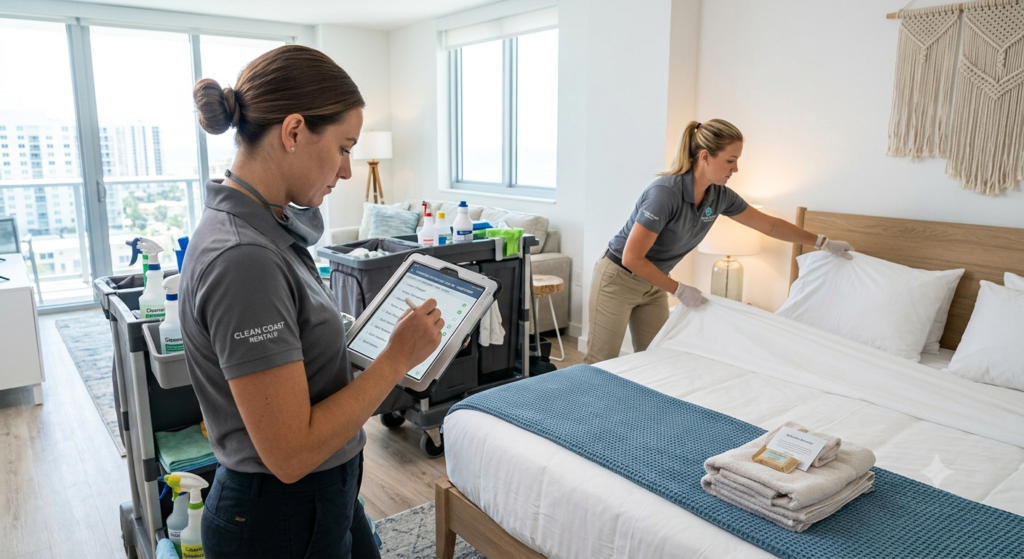
Every serious Turno review eventually stops being about cleaning software and starts becoming a conversation about revenue management.
Guests never leave five-star reviews because your pricing algorithm worked. They leave five-star reviews because the property was spotless, ready on time, and exactly as promised.
Across U.S. vacation markets — from Scottsdale and Nashville to Orlando and the Smoky Mountains — cleaning operations directly influence occupancy rates, review scores, and long-term profitability. Revenue managers understand that housekeeping isn’t just an expense category. It’s a revenue engine.
This review looks at Turno through that lens: not as a standalone app, but as an operational system that shapes booking performance throughout the year.

The Revenue Manager Perspective
Many first-time hosts evaluate software using one question: “Will this save me time?” Professional operators ask something different: “Will this protect revenue?”
That distinction changes everything.
Cleaning Delays Reduce Revenue
One delayed turnover can trigger a chain reaction — guest complaints, refund requests, lower review scores, reduced search visibility, and future booking losses. The financial impact rarely stays contained to a single reservation. A single one-star review citing cleanliness can suppress bookings for months, especially in competitive markets where guests compare dozens of similar listings before choosing.
Cleaning Consistency Supports Premium Pricing
Properties with exceptional operational standards tend to maintain higher nightly rates, better occupancy, and stronger repeat business. Guests notice consistency — and so do booking platform algorithms, which increasingly factor cleanliness ratings into search ranking.
Revenue Management Starts With Operations
Pricing strategies matter. Dynamic rates matter. Distribution channels matter. But none of them compensate for operational failures. The strongest vacation rental businesses build reliable systems before they optimize pricing.
Seasonal Considerations
Cleaning operations change dramatically throughout the year, and revenue managers adjust their systems according to demand cycles.
Summer Beach Markets
Destinations such as Destin, Myrtle Beach, and the Outer Banks experience rapid turnovers, same-day departures and arrivals, and larger family groups. Cleaning teams need additional staffing, standardized procedures, and backup resources on call. Operational flexibility isn’t optional here — it’s the difference between a five-star week and a refund request.
Mountain Destinations
Markets like Gatlinburg, Pigeon Forge, and Breckenridge face different challenges: weather disruptions, holiday concentration, and weekend-heavy occupancy patterns. Scheduling precision matters more than sheer staffing volume, since a snowstorm-delayed cleaner can throw off an entire weekend’s bookings.
Urban Markets
Cities such as Nashville, Austin, and Chicago typically see event-driven demand, shorter stays, and faster cleaning cycles. Housekeeping efficiency directly influences profitability here, since turnover windows are often just a few hours between a conference crowd checking out and a concert crowd checking in.
The same cleaning strategy rarely succeeds year-round. Revenue managers continuously adapt staffing levels, turnover procedures, and quality control standards — flexibility creates resilience.
Peak Season Strategy
Peak periods reveal operational weaknesses quickly. Strong systems become competitive advantages.
Build Redundancy Into Cleaning Teams
Professional operators avoid depending on a single cleaner. A more resilient structure includes primary cleaners, backup providers, emergency contacts, and documented procedures that any of them can follow without guesswork. Redundancy protects revenue when someone calls in sick during a holiday weekend.
Automate Scheduling
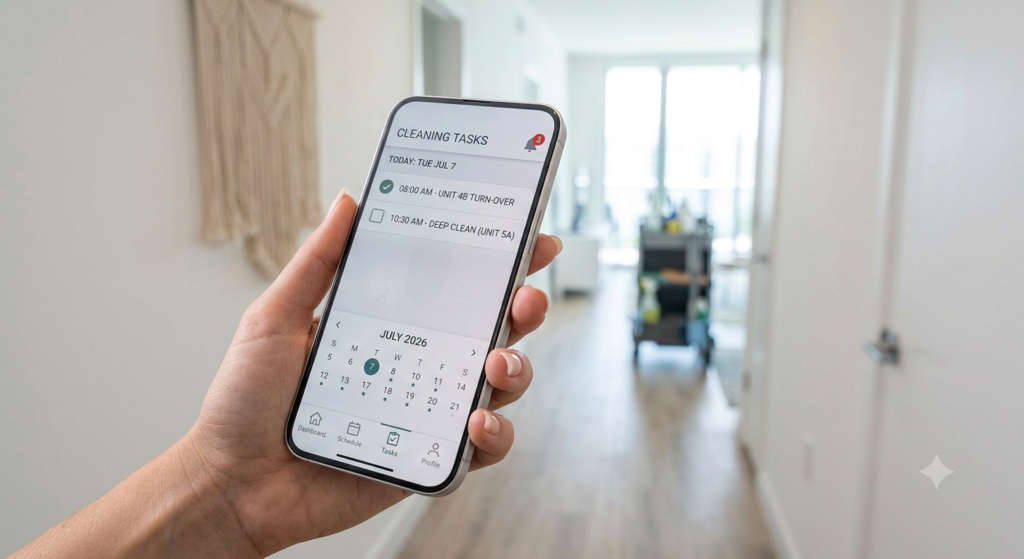
Manual coordination — texting cleaners one by one, hoping someone confirms — creates unnecessary risk. Automation supports instant notifications, task assignments, calendar synchronization, and completion tracking. This is exactly where an Airbnb cleaning management app earns its keep.
Standardize Turnover Procedures
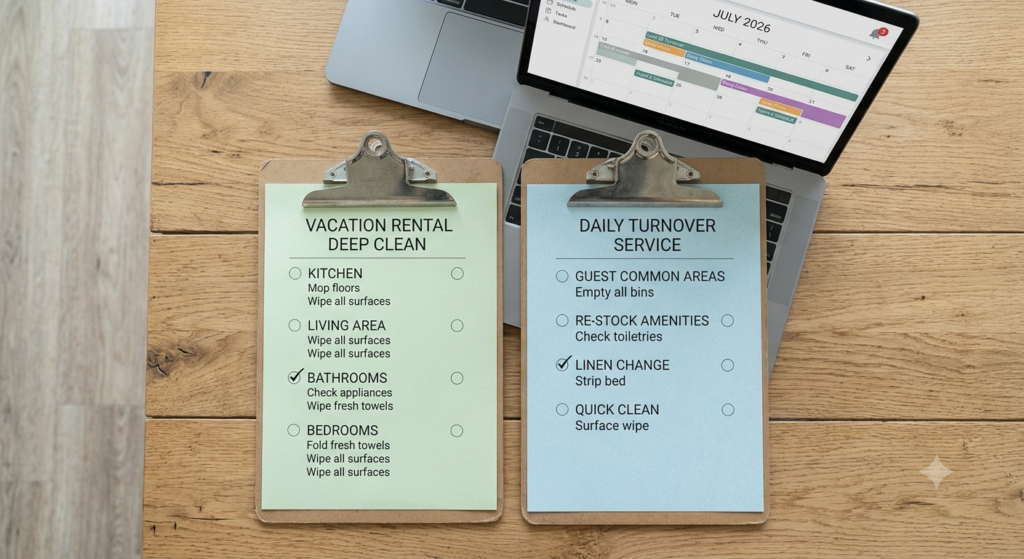
Every cleaner should follow identical expectations: linen replacement, inventory checks, maintenance reporting, and photo verification. Consistency matters more than individual preference, especially when a property rotates through three or four different cleaners in a busy month.
Protect Same-Day Turnovers
Revenue managers prioritize buffer periods, emergency protocols, and clear communication systems. Peak season rarely allows for mistakes — a single missed check-in window can cascade into same-day cancellations.
Example: A property management company operating family homes near Orlando’s theme parks implemented mandatory turnover checklists, automated cleaner assignments, and backup vendor agreements ahead of summer. The result wasn’t just smoother operations — it measurably reduced cancellations and protected occupancy during the peak demand surge, when a single cleaning delay could have meant losing a family’s entire week-long booking.
Off-Season Strategy: Preparation, Not Downtime
Many hosts underestimate the importance of off-season operations. Revenue managers see these quieter months differently — as a preparation season rather than lost time.
Conduct Deep Cleaning Projects
Off-season periods are ideal for carpet cleaning, appliance maintenance, furniture repairs, and inventory replacement. Preventive action now reduces disruptions later, when there’s no room in the schedule for a broken washing machine.
Audit Cleaner Performance and Update Procedures
This is the time to ask which cleaners performed consistently, what guest complaints appeared repeatedly, and which processes caused delays. Strong operators use these answers to revise turnover checklists, supply inventories, maintenance reporting protocols, and emergency contact lists before demand returns.
Test New Technology
Implementing new software during peak season introduces unnecessary risk. Quieter months are the right time to train cleaners, integrate calendars, automate workflows, and establish accountability systems — so that everything is already running smoothly when bookings pick back up.
Holiday Opportunities
Holidays create some of the highest-revenue periods in vacation rentals. They also expose operational weaknesses faster than any other season.
Thanksgiving and Winter Markets
Destinations such as Gatlinburg, Blue Ridge, and Sedona see family gatherings, longer stays, and larger cleaning requirements. Advance planning matters — a five-bedroom cabin sleeping twelve people takes far longer to turn over than a studio condo.
Christmas and New Year’s Operations
Professional operators often implement backup cleaner schedules, premium compensation to keep staff available during holidays, and additional inventory reserves. Holiday turnovers cannot rely on normal staffing assumptions, since many cleaners understandably want time off too.
Summer Holiday Demand
Markets like Destin, Cape Cod, and San Diego require faster turnover times, enhanced communication, and additional quality checks during holiday weekends. High occupancy magnifies any operational failure — a cleaning delay on July 4th weekend affects far more guests than the same delay in a quiet February.
Missing one holiday reservation because of a cleaning issue can impact immediate income, future guest loyalty, and review performance all at once. Holiday readiness is revenue protection.
How the Market Is Changing
Vacation rental markets continue evolving, and cleaning operations have to evolve alongside them.
Today’s travelers expect hotel-level cleanliness and consistent, professional presentation — average performance no longer creates differentiation in a crowded market. At the same time, many U.S. destinations face seasonal labor shortages and rising wage pressures, making reliable staffing harder to guarantee without technology to fill the gaps. And as more guests book directly rather than through platforms, hosts carry greater responsibility for reputation — operational failures now affect brand trust and referral opportunities directly, without a platform’s review system to buffer the impact. According to Skift, guest expectations in the short-term rental industry continue to rise as travelers compare properties to hotel-level standards
Data from the U.S. Bureau of Labor Statistics confirms that seasonal labor shortages remain a persistent challenge across the hospitality sector
Revenue Optimization Through Operations
Revenue managers understand a fundamental truth: occupancy and cleanliness are interconnected.
Consistent operations contribute to stronger ratings, premium pricing, and increased guest trust — revenue optimization genuinely begins with guest satisfaction. Efficient turnovers also enable same-day bookings and more flexible scheduling, which increases inventory utilization across the calendar. And because platforms reward positive experiences and low cancellation rates, cleaning standards indirectly influence search visibility too.
The most successful operators budget for training, technology, and backup resources the same way they’d budget for marketing — because these operational investments produce measurable returns.
Turno vs. Properly: Which Cleaning Tool Fits Your Business?
The comparison between Turno and Properly reflects two different management philosophies, and neither solution universally dominates.
Turno emphasizes cleaner marketplace access, automated scheduling, and reservation synchronization. It tends to suit independent hosts, growing portfolios, and multi-property operators who need to find and coordinate cleaners quickly.
Properly focuses heavily on visual checklists, standardized procedures, and quality control. Many managers appreciate its detailed cleaning instructions, photo-based workflows, and built-in training support.
If you value finding cleaners quickly and automating coordination, Turno may align better with your needs. If you prioritize process standardization and visual accountability, Properly offers compelling advantages. The right decision depends on your operational needs rather than a simple feature checklist.
Vacation Rental Housekeeping Software: The Bigger Picture
The vacation rental housekeeping software ecosystem keeps expanding, and professional operators increasingly combine multiple systems rather than relying on one all-in-one platform.
Common technology stacks include property management systems, dynamic pricing tools, cleaning coordination platforms, and maintenance software working together. When evaluating any of these, weigh a few key factors:
| Factor | Why It Matters |
|---|---|
| Reliability | Prevents operational disruptions |
| Ease of use | Supports team adoption |
| Automation | Reduces manual coordination |
| Scalability | Accommodates portfolio growth |
| Integration | Improves workflow consistency |
More functionality isn’t always better. The strongest systems often prioritize simplicity, consistency, and adoption over an ever-growing feature list.
Revenue Manager’s Cleaning Operations Checklist
- Confirm cleaner schedules two weeks before peak periods.
- Maintain backup cleaning vendors.
- Standardize turnover procedures across all cleaners.
- Review guest cleanliness feedback monthly.
- Conduct off-season deep-clean projects.
- Update inventory and supply lists quarterly.
- Test software integrations before high-demand seasons.
- Document emergency protocols.
- Review labor capacity ahead of holidays.
- Audit operational metrics regularly.
Consistent execution supports revenue growth more reliably than any single pricing tweak.
Frequently Asked Questions
Is Turno worth it for Airbnb hosts? For many multi-property operators, Turno provides valuable automation and scheduling efficiency. Single-property hosts should weigh whether those benefits justify the cost and setup time for a smaller operation.
What is the best Airbnb cleaning management app? The ideal app depends on your operational needs, portfolio size, and preferred workflows. Reliability and team adoption matter more than raw feature counts.
How does Turno compare with Properly? The comparison generally comes down to automation versus process standardization — Turno leans toward scheduling and marketplace access, while Properly leans toward checklists and visual quality control.
Do cleaning operations really affect revenue? Yes. Cleanliness influences reviews, pricing power, occupancy, and repeat bookings. Operational consistency directly supports profitability.
Should hosts use dedicated housekeeping software? As portfolios expand, dedicated vacation rental housekeeping software often improves efficiency, accountability, and guest experience. Manual systems become harder to maintain at scale.
Conclusion
This review ultimately leads to a broader insight: cleaning operations aren’t just maintenance functions. They’re revenue systems.
From Orlando vacation homes to Smoky Mountain cabins and Arizona desert retreats, the strongest operators understand that reliable turnovers protect occupancy, consistency supports premium pricing, automation reduces operational risk, and guest trust drives long-term growth.
Software alone doesn’t create successful businesses — well-designed processes do. Turno represents one approach to building those processes, and whether it’s the right fit depends on your portfolio size, team structure, and growth ambitions.
Revenue managers optimize more than prices. They optimize experiences — and clean, dependable experiences remain one of the most valuable assets any vacation rental business can build



Leave a Reply