
You finally get your Airbnb listing running smoothly — then the messages start arriving at midnight, guests ask for early check-ins, cleaners cancel unexpectedly, and your weekend plans start revolving around turnovers. At some point, most hosts ask the same question: should I bring in an Airbnb co-host?
Understanding the Airbnb co-host meaning matters for two very different groups of people. Property owners want to know if a co-host can rescue their sanity and their reviews. And a growing number of people are searching for airbnb co-host jobs, wondering if becoming one is a legitimate way to earn income — sometimes without owning any property at all.
This guide covers both sides: what a co-host actually does, how to become an airbnb co-host if you’re the one looking for work, typical fee structures, and how to add one to your own listing if you’re the owner.
Quick Answer: Airbnb Co-Host Meaning
An Airbnb co-host is a person authorized by the primary host to help manage a listing — communicating with guests, coordinating cleanings, adjusting pricing, and handling day-to-day operations. Co-hosts are usually compensated through a fixed fee or a percentage of booking revenue, with the airbnb co-host fee percentage typical range running from 10% to 30% depending on scope. Some co-hosts assist occasionally; others run a property almost like a full-service manager.
What Does an Airbnb Co-Host Do?
Many new hosts assume a co-host just answers guest messages. In reality, the role varies a lot — some co-hosts help only during vacations, others manage entire portfolios for multiple owners as an actual business.
Typical responsibilities include responding to guest inquiries, managing reservations, coordinating cleaning teams, handling maintenance requests, updating calendars, monitoring pricing, welcoming guests, resolving emergencies, managing reviews, and supervising turnovers. The exact role depends entirely on what both parties agree to.
Full-service co-hosts often provide revenue management, dynamic pricing oversight, cleaning coordination, maintenance scheduling, guest support, and listing optimization — resembling a property management service, but usually with more flexibility on both sides.
Limited-scope co-hosts cover something narrower — responding during work hours, covering vacations, handling weekend check-ins, or stepping in for emergencies only. Not every relationship needs the full package.
Why Co-Hosting Matters for Modern Airbnb Hosts
Short-term rentals have gotten more competitive, and guests now expect immediate responses, hotel-level cleanliness, flexible communication, and a smooth check-in every time. Meeting all of that alone gets harder the more bookings come in.
Burnout is more common than most hosts admit. Working with hosts who’ve hit a wall after a strong first year, the pattern usually looks the same: constant phone notifications, weekend cleaning coordination, a guest emergency during a family event, and pricing adjustments eating hours every week. Co-hosting gives owners real operational support without sacrificing profitability or their own quality of life.
Managing a single listing is manageable solo. Managing three, five, or ten requires actual systems and people — and growth without support tends to show up as poor reviews, slower response times, operational mistakes, and host exhaustion. Co-hosting becomes the bridge between independent hosting and full-service property management, a step that pairs naturally with the software tools that make scaling manageable.

How to Become an Airbnb Co-Host
If you’re on the other side of this — looking for airbnb co-host jobs rather than hiring for one — the path in is more accessible than most people assume, though it does take real skills and reliability to actually get paid well for it.
Airbnb Co-Host Requirements
There’s no official certification needed, but hosts looking for a co-host generally expect: an existing Airbnb account in good standing, strong written and verbal communication, comfort with a smartphone and basic apps, reliability (especially for anyone offering local, in-person support), and — for anything beyond messaging — hospitality or cleaning coordination experience.
Where to Find Airbnb Co-Host Jobs
Most co-hosting work is found through direct outreach rather than a formal job board — reaching out to local hosts directly, joining Airbnb host Facebook groups and local host meetups, and networking through property management platforms like Hospitable or Hostaway, which many management companies use to bring on additional support staff.
Some people also look for an established airbnb co-host network — informal or semi-formal groups where experienced co-hosts share leads, refer each other for overflow work, and occasionally partner on multi-property management. These aren’t run by Airbnb itself, so it’s worth vetting any group or “official” airbnb co-host network claim carefully before paying for access or handing over guest data.
How Much Can an Airbnb Co-Host Make?
Earnings vary enormously based on scope and location. A co-host handling only guest messaging for one listing might earn a flat $150–$400 a month. Someone managing full operations — cleaning coordination, pricing, maintenance — for several properties can earn a meaningful percentage of gross booking revenue instead, which scales with how much the portfolio brings in. A co-host running full operations for five well-booked properties at a 20% commission could realistically be looking at a few thousand dollars a month, though this depends completely on occupancy, nightly rates, and how much of the work is actually automated versus hands-on.
The Airbnb Co-Host Program
Airbnb itself runs a co-hosting feature built directly into the platform — hosts can add a co-host through their listing settings and assign specific permissions, and in some cases Airbnb allows split payouts between host and co-host directly. It’s worth noting this program has evolved over time, so checking Airbnb’s current co-hosting resources directly is the most reliable way to confirm what’s currently supported rather than relying on older blog posts (including this one).
Different Types of Airbnb Co-Hosting Arrangements
Family co-hosting is one of the most common setups — spouses sharing responsibilities, adult children managing guest communication, parents helping with turnovers. These usually involve informal compensation or shared ownership rather than a formal contract.
Friend or neighbor partnerships offer a real advantage in physical proximity — someone local can handle an emergency quickly, inspect the property, coordinate cleaners, or greet guests in person.
Professional co-hosting services typically offer the full package — revenue management, guest communication, listing optimization, vendor coordination, maintenance oversight — resembling a management company but often with more flexibility in the relationship.
Investment partnerships split ownership and operations entirely — one partner brings capital and the property, the other brings hospitality expertise and daily management, with a revenue-sharing arrangement tying the two together.
Airbnb Co-Host Fee Percentage: What Is Fair?
There’s no single industry standard, but a few models dominate.
| Service Level | Common Fee Range |
|---|---|
| Guest messaging only | 5–10% |
| Cleaning coordination | 10–15% |
| Full operational support | 15–25% |
| Premium management services | 25–35% |
The airbnb co-host commission rate generally scales with how much responsibility is actually being handed over — more oversight, higher percentage.
Some arrangements skip percentages entirely in favor of fixed monthly payments — $300 a month for messaging support, $500 for broader operational oversight, or hourly pay for occasional help. Predictable costs appeal to a lot of owners who don’t want their expenses tied to booking volume.
A hybrid structure — a small monthly retainer plus performance incentives or revenue-sharing bonuses — often aligns incentives best between both sides.
Pricing here depends on property location, booking volume, luxury level, guest expectations, scope of responsibility, and emergency availability. A beachfront property with weekly turnovers naturally needs more involvement than a slower vacation rental, and airbnb co-host fees should reflect that difference.
What Makes the Best Airbnb Co-Host?
There’s no universal answer to what is the best airbnb co-host, but the strongest ones consistently share a few traits: fast, clear communication; genuine reliability during emergencies, not just business hours; real hospitality instincts rather than just task-completion; comfort with the tools the owner already uses (calendar sync, messaging templates, task apps); and a track record — even an informal one — that an owner can actually verify before handing over access to their listing.
People Also Ask: Airbnb Co-Hosting Questions
Can a co-host access guest messages? Yes — permission settings determine communication access, and many co-hosts handle guest conversations entirely on the owner’s behalf.
Does Airbnb pay co-hosts directly? In certain arrangements, payouts can be split according to platform capabilities and local policy, though plenty of hosts still handle compensation independently outside the platform.
Can multiple co-hosts manage one property? Absolutely — one person handling cleaning, another guest support, a third overseeing maintenance. Responsibilities can be split by expertise rather than assigned to a single person.
Is a co-host the same as a property manager? Not always. Some co-hosts provide limited support; others operate essentially like a professional management company. The distinction comes down to responsibilities, not the title itself.
Step-by-Step: Preparing to Add a Co-Host
Before learning how to add a co-host on Airbnb, owners should nail down expectations first — skipping this step causes most of the problems that show up later.
Step 1: Define responsibilities in writing — guest communication, cleaning coordination, maintenance handling, pricing decisions, emergency protocols, review management. Specific responsibilities prevent a lot of misunderstanding down the road.
Step 2: Establish financial terms openly — percentage structures, monthly fees, performance bonuses, expense reimbursement. Clear numbers up front protect the relationship later.
Step 3: Determine decision-making authority. Can the co-host approve refunds, change nightly rates, extend stays, coordinate vendors, or resolve guest complaints independently? These questions deserve answers before account access is granted, not after something goes wrong.
Step 4: Document everything. Even close friends and family benefit from something written down — it prevents disputes later and sets a professional standard from day one.

How to Add a Co-Host on Airbnb
Once responsibilities and compensation are settled, the technical setup itself is straightforward.
Step 1: Log in and select the property from Listings → Select Property → Hosting Settings (menu labels shift occasionally with platform updates, but co-host options stay within listing management).
Step 2: Find the section labeled Co-hosts, Hosting team, or Listing permissions.
Step 3: Enter the co-host’s Airbnb profile and email — they’ll need an existing account, or need to create one before accepting.
Step 4: Assign permissions specifically — guest messaging, calendar management, reservation oversight, pricing adjustments, review responses, operational coordination. Grant only what their actual role requires.
Step 5: Before activating access, review emergency procedures, refund policies, maintenance protocols, communication standards, and financial arrangements one more time together. Technology solves the access problem — it doesn’t solve a relationship problem, so clear expectations still matter most.
Airbnb Co-Host Agreement Template
One of the biggest mistakes hosts make is relying on a verbal agreement — even family members benefit from something written down. Below is a basic framework you can use as an airbnb co-host agreement template.
Parties involved: property owner, co-host, property address, effective dates.
Scope of responsibilities: guest communication, cleaning coordination, maintenance requests, calendar updates, pricing management — avoid vague descriptions here specifically, since specificity is what prevents disputes.
Compensation structure: fixed monthly payments, percentage arrangements, performance incentives, reimbursement procedures — all documented, not just discussed verbally.
Decision-making authority: whether the co-host can issue refunds, change rates, approve discounts, hire vendors, or resolve complaints independently.
Sample compensation clause: “The co-host shall receive 20% of gross booking revenue in exchange for guest communication, turnover coordination, maintenance scheduling, and operational support.”
Every situation differs — consult a legal professional when formalizing an actual business arrangement, especially one involving revenue splits or ongoing access to someone else’s property.
Tools That Help Co-Hosts Work More Efficiently
Shared calendar systems give co-hosts visibility into reservations, cleaning schedules, maintenance appointments, and owner stays — sync prevents the kind of costly double-booking mistake covered in our guide to channel managers.
Dynamic pricing platforms turn revenue management into a genuinely shared responsibility, handling seasonal adjustments, event-based pricing, minimum stay rules, and occupancy optimization automatically — a workflow covered fully in our PriceLabs review.
Messaging automation speeds up guest responses considerably — check-in instructions, house rules, checkout reminders, and FAQs can run mostly on templates, freeing the co-host’s time for anything that actually needs a human, a system covered in how to automate Airbnb messages without losing the personal touch.
Task management software helps coordinate cleaners, maintenance teams, inventory, and emergency repairs — organization that matters more the bigger the portfolio gets.
Common Mistakes Hosts Make With Co-Hosting
Choosing convenience over competence — a friend being available isn’t the same as being qualified. Look for reliability, communication skills, hospitality experience, and real problem-solving ability, since trust matters but competence matters just as much.
Failing to establish written agreements, which creates unnecessary risk for both the relationship and the finances involved.
Giving unlimited access immediately instead of starting conservatively and expanding permissions as trust actually develops.
Ignoring guest experience standards — guests rarely distinguish between the owner and the co-host, so inconsistent communication damages reviews regardless of who technically caused the issue.
Forgetting about exit plans — not every partnership lasts forever, and account access removal, financial settlements, and guest communication handoffs deserve a plan before they’re urgently needed.
Expert Tips for Better Co-Hosting Management
A few principles consistently produce better outcomes across the hosts and co-hosts who do this well long-term.
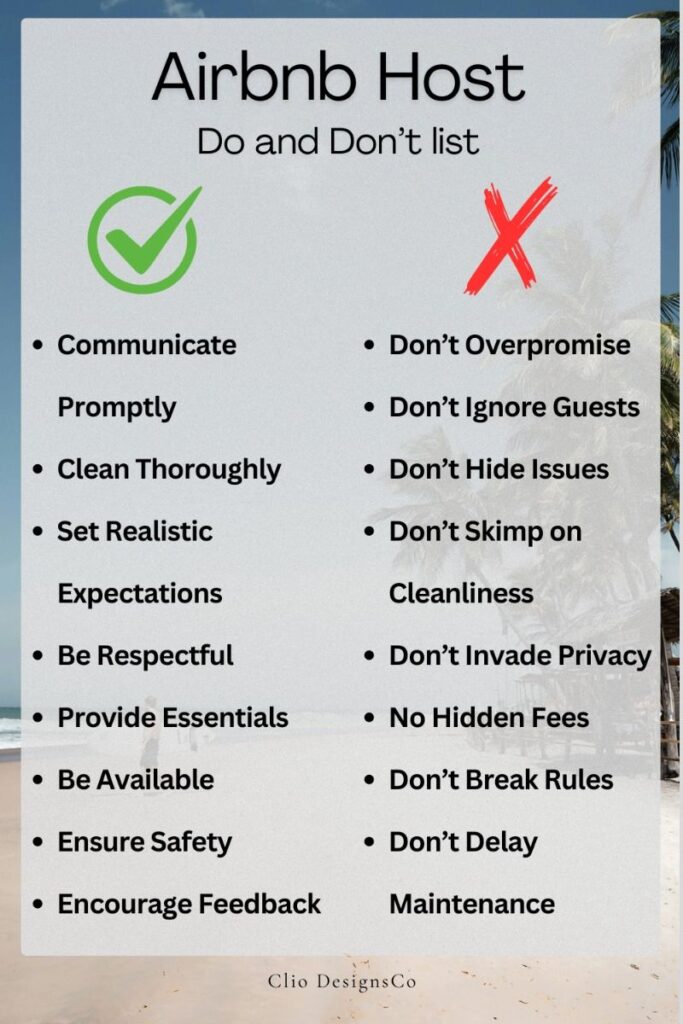
Start new co-hosts with limited responsibilities — guest messaging, cleaning coordination, basic operational support — and expand gradually rather than handing over everything on day one. Schedule monthly reviews covering guest feedback, operational challenges, revenue performance, and process improvements, since regular check-ins strengthen the partnership more than an annual conversation ever does. Document standard operating procedures for check-in, emergencies, vendors, cleaning, and refunds, so the system doesn’t live entirely in one person’s memory. And align incentives with performance — percentage-based compensation tends to encourage better guest experiences and stronger occupancy, since everyone benefits when the property actually does well.
Even the closest friendships benefit from treating this like an actual business relationship — clear boundaries and communication standards make for a healthier partnership over the long run than good intentions alone.
Frequently Asked Questions
What is the meaning of an Airbnb co-host?
An Airbnb co-host is a person authorized to help manage a listing — handling guest communication, operations, pricing, and maintenance coordination alongside or instead of the primary host.
How much should a co-host charge?
Typical airbnb co-host fee percentage arrangements run 10% to 30% of booking revenue, depending on the scope of services provided.
How do I become an Airbnb co-host?
Start by reaching out directly to local hosts, joining host communities and Facebook groups, and building a track record with one or two properties before marketing yourself more broadly. No formal certification exists, but reliability and communication skills matter more than almost anything else.
Can I have more than one co-host?
Yes. Many successful operators split responsibilities among several people — cleaners, guest communication specialists, and maintenance coordinators each handling their own piece.
How do I add a co-host on Airbnb?
Access your listing settings, navigate to co-host management tools, send an invitation, assign specific permissions, and confirm operational expectations before activating access.
Do I need an Airbnb co-host agreement?
Yes. A written agreement clarifies responsibilities, compensation, authority levels, and dispute resolution, protecting both sides from the misunderstandings that come with a purely verbal arrangement.
Conclusion
Understanding the Airbnb co-host meaning goes well beyond just granting someone access to a listing. Done well, co-hosting creates real operational resilience, improves guest experience, reduces burnout, and lets hosts scale sustainably instead of grinding toward it alone — and for the right person on the other side, it’s a genuine way to build income managing properties without ever owning one.
The best partnerships share a few things in common: clear responsibilities, a written agreement, transparent compensation, and real communication between both sides. Whether you need occasional support, you’re looking to become a co-host yourself, or you’re managing a full-service arrangement across several properties, the right partnership can end up being one of the more valuable pieces of a sustainable hosting business — as long as it’s built intentionally from the start rather than figured out after something’s already gone wrong.


Leave a Reply