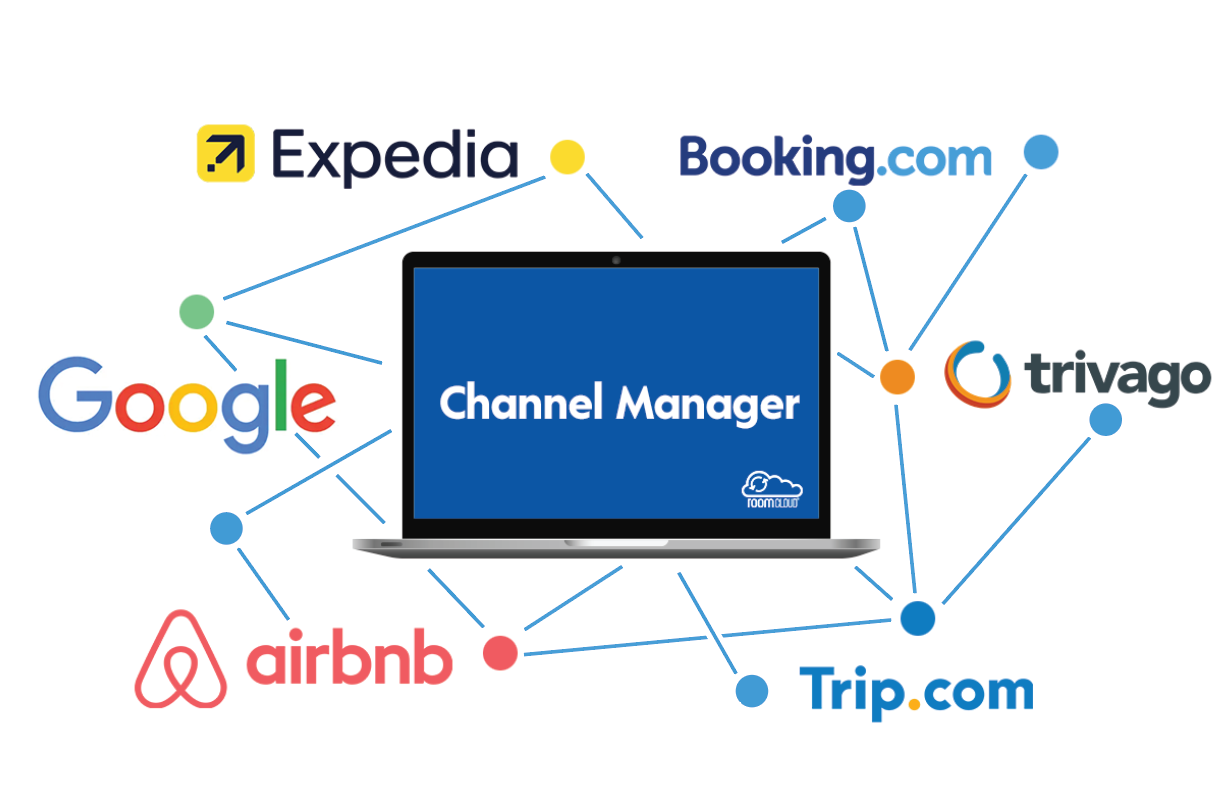
Ask ten Airbnb hosts what a channel manager actually does, and you’ll get ten different half-answers. Most single-property hosts never think about it — until a second booking platform enters the picture and their spreadsheet-based system starts falling apart.
Here’s the moment it usually clicks: a guest books through Airbnb, and before the calendar gets updated manually, someone else books the same dates on VRBO. That’s the double-booking problem, and it’s exactly what a channel manager exists to prevent — by keeping availability, rates, and reservations synced across every platform a host uses.
This guide moves in stages: what a channel manager actually is, how it differs from a full property management system, and how U.S. hosts scale their approach as their portfolio grows from one listing to dozens.
Featured Snippet Answer
A vacation rental channel manager is software that automatically synchronizes calendars, pricing, and bookings across platforms like Airbnb, VRBO, and direct booking websites. It prevents double bookings, reduces manual work, and helps hosts manage multiple distribution channels from one central dashboard.
For single-property hosts, manual systems may work initially. For growing businesses, channel management quickly becomes essential infrastructure — something worth planning for early if you’re just learning how to start a short-term rental business in the U.S.
Beginner Basics
Understanding channel management begins with a simple question.
Why Do Hosts Need Multiple Booking Channels?
Airbnb offers tremendous visibility. Yet many experienced U.S. operators also use VRBO, direct booking websites, regional travel platforms, and corporate housing networks.
Additional channels create more exposure, diversified income streams, and reduced dependence on one platform.
The challenge: every new channel introduces operational complexity.
The Manual Approach Most Beginners Use
New hosts commonly manage calendars through spreadsheet tracking, manual blocking, calendar exports, and constant monitoring.
This approach works — until growth arrives.
The Double-Booking Problem
Imagine a guest books your cabin through Airbnb. Before you manually update VRBO, another traveler reserves identical dates.
Now you face cancellations, negative reviews, financial penalties, and guest frustration. Channel managers eliminate much of this risk.
The Core Function
At its simplest, a channel manager performs three jobs: it updates availability instantly, synchronizes reservations, and maintains pricing consistency. Everything else builds upon those fundamentals.
Channel Manager vs PMS Difference
One of the biggest misconceptions involves the channel manager vs PMS difference. Many hosts assume they’re identical. They are not.
What a Channel Manager Does
Primary responsibilities include calendar synchronization, reservation updates, rate distribution, and availability management. Think of it as a distribution engine.
What a Property Management System Does
A PMS handles broader operational needs such as guest messaging, cleaning schedules, owner reports, financial management, and team coordination.
The PMS manages operations. The channel manager manages distribution.
The Simplest Analogy
Imagine a hotel. The PMS operates the building. The channel manager fills the rooms. Both matter — they simply solve different problems.
Comparison Table: Channel Manager vs PMS
| Function | Channel Manager | Property Management System |
|---|---|---|
| Syncs Airbnb and VRBO calendars | Yes | Sometimes |
| Prevents double bookings | Yes | Often via integrations |
| Manages guest communications | Limited | Yes |
| Handles cleaning workflows | No | Yes |
| Generates owner reports | No | Yes |
| Supports team operations | Limited | Yes |
| Controls pricing distribution | Yes | Sometimes |
Modern platforms increasingly combine both capabilities. Still, understanding their distinct roles remains important.
How to Sync Airbnb and VRBO Calendars
Many beginners search for how to sync Airbnb and VRBO calendars before investing in software. Several methods exist.
Method 1: Manual Calendar Exports
The simplest approach uses iCal links. Hosts export Airbnb calendars, import them into VRBO, and repeat the process in reverse.
Advantages: free, easy to implement, suitable for one property.
Limitations: delayed updates, greater double-booking risks, no rate synchronization. Manual systems have limits.
Method 2: Semi-Automated Solutions
Some tools improve synchronization without requiring full property management systems. Benefits include faster updates, better reliability, and reduced administrative work. However, scaling remains challenging.
Method 3: Full Channel Management
Professional systems provide near real-time updates, unified dashboards, pricing synchronization, and multi-channel distribution. This approach supports long-term growth.
When Should You Upgrade?
| Number of Listings | Recommended Approach |
|---|---|
| 1 property | Manual sync acceptable |
| 2–3 properties | Consider automation |
| 4–10 properties | Channel manager strongly recommended |
| 10+ properties | Professional systems essential |
Growth changes operational requirements.
Beginner Mistakes That Delay Growth
Many U.S. hosts remain in beginner mode longer than necessary.
Mistake #1: Depending on One Platform. Exclusive reliance on Airbnb creates vulnerability — platform changes affect visibility, fees, and policies. Diversification improves resilience, and it pairs well with the work you’d already put into getting more bookings on Airbnb in the first place.
Mistake #2: Avoiding Technology Too Long. Some operators resist automation because existing systems feel familiar, software appears expensive, or learning curves seem intimidating. Short-term comfort sometimes limits long-term growth.
Mistake #3: Treating Distribution as an Afterthought. Distribution strategy influences occupancy, revenue, and brand visibility. Professional hosts think beyond single channels.
Intermediate Strategies
Growth introduces entirely new challenges. The systems that worked with one listing often struggle with three.
Building Multi-Channel Operations
Intermediate hosts generally expand into Airbnb, VRBO, direct bookings, and repeat guest programs. The objective isn’t maximizing channel count — it’s creating reliable demand streams.
Standardizing Availability Rules
Consistency matters. Many growing operators establish uniform minimum stays, seasonal restrictions, pricing policies, and check-in windows. Automation supports enforcement.
Developing Operational Visibility
As complexity increases, hosts need answers to questions like: which platform generated the reservation? What rates performed best? Which dates remain vulnerable? Visibility drives better decisions.
The Transition From Host to Operator
This stage represents a major mindset shift. Beginners manage bookings. Operators manage systems. The distinction becomes increasingly important as U.S. portfolios expand.
Create Consistent Pricing Rules
When managing multiple channels, inconsistency creates problems. Professional operators establish weekend pricing standards, holiday premiums, minimum-night requirements, and seasonal adjustments. Uniform rules reduce confusion and improve operational efficiency.
Monitor Channel Performance Separately
Not all booking sources perform equally. Track average nightly rates, length of stay, cancellation patterns, and guest quality. Understanding channel behavior supports smarter decisions — the same discipline that matters when evaluating occupancy performance by city before expanding into a new market.
Develop Repeat Guest Strategies
Direct bookings eventually become important. Guests who enjoyed previous stays may prefer returning directly, avoiding platform searches, or receiving personalized communication. Diversification begins with relationships.
Advanced Systems
Advanced hosts think in terms of infrastructure. Technology becomes part of the business foundation.
Integrating Channel Managers With PMS Platforms
Many experienced operators combine distribution tools, property management systems, dynamic pricing software, and accounting platforms. Each component serves a specific purpose. The goal is a connected ecosystem — one where even cleaning coordination software plugs into the same calendar data the channel manager keeps synced.
Automated Revenue Management
Modern systems allow seasonal pricing updates, event-based adjustments, and occupancy-driven strategies. Manual updates become increasingly impractical at scale.
Direct Booking Expansion
Professional operators frequently support brand websites, email marketing, and repeat guest programs. A strong channel strategy includes owned audiences.
Multi-Market Operations
Hosts managing properties across different U.S. regions face additional complexity, including localized pricing, distinct cleaning teams, and market-specific restrictions. Centralized systems provide valuable visibility.
Professional Tips
Years of hosting experience reveal several consistent lessons.
Expand channels gradually. Adding every platform immediately creates unnecessary complexity. Growth should remain intentional.
Prioritize reliability over features. The most feature-rich solution isn’t always the best. Dependable synchronization matters more than endless options.
Document standard operating procedures for pricing adjustments, calendar management, reservation handling, and emergency responses. Documentation supports scalability.
Review integrations carefully. Software ecosystems evolve, and regular evaluations help ensure tools continue supporting operational goals.
Think beyond today’s portfolio. Technology decisions influence future growth opportunities. Choose systems that accommodate expansion.
Scaling Advice
Scaling requires different thinking. The host mindset evolves into an operator mindset.
Stage One: Single Property
Primary focus: guest experiences, manual oversight, learning fundamentals. Technology needs remain minimal.
Stage Two: Multiple Listings
Priorities shift toward automation, calendar synchronization, and standardized procedures. Systems begin replacing manual tasks.
Stage Three: Professional Operations
At this stage, operators typically require advanced reporting, team coordination, owner communication tools, and revenue optimization systems. Infrastructure supports sustainable growth.
Best Channel Manager for Vacation Rental: What Matters Most?
The discussion around the best channel manager for vacation rental businesses often focuses on feature lists. Experienced U.S. hosts prioritize different criteria.
Reliability — availability synchronization must work consistently. Trust forms the foundation.
Ease of use — complex systems create training challenges, operational friction, and reduced adoption.
Integration capabilities — strong ecosystems support property management systems, dynamic pricing tools, accounting software, and direct booking websites.
Scalability — the best channel manager vacation rental operators choose often accommodates future expansion without requiring disruptive migrations. Industry resources like Hospitable’s channel manager comparisons can help hosts benchmark options before committing to one system.
The Progressive Growth Framework
Use this framework to guide your evolution from beginner host to professional operator.
Phase 1: Learn — understand distribution basics, experiment with platforms, develop operational routines.
Phase 2: Automate — introduce channel synchronization, standardized pricing, communication templates.
Phase 3: Optimize — analyze channel performance, revenue patterns, guest behavior.
Phase 4: Scale — expand through additional listings, direct bookings, team development.
Professional Checklist
Vacation Rental Channel Management Checklist
☑ Confirm calendars synchronize correctly across all platforms
☑ Establish consistent pricing rules
☑ Review minimum-stay requirements
☑ Document operational procedures
☑ Monitor channel-specific performance
☑ Test integrations quarterly
☑ Maintain emergency communication plans
☑ Develop repeat guest strategies
☑ Evaluate technology annually
☑ Plan for future expansion
Frequently Asked Questions
What is a channel manager in vacation rentals?
A channel manager synchronizes availability, pricing, and reservations across multiple booking platforms, reducing manual work and helping prevent double bookings.
What is the difference between a channel manager and a PMS?
The channel manager vs PMS difference centers on purpose. Channel managers handle distribution. Property management systems oversee broader operational activities.
How do I sync Airbnb and VRBO calendars?
Hosts can use manual iCal exports or dedicated software solutions. As portfolios grow, automated systems generally become more reliable.
What is the best channel manager for vacation rentals?
The ideal solution depends on portfolio size, operational complexity, and growth ambitions. Reliability, usability, and scalability typically matter more than feature quantity.
Do beginners need a channel manager?
Not always. Single-property hosts may begin with manual systems. However, automation becomes increasingly valuable as additional channels and listings are introduced.
Conclusion
A channel manager isn’t glamorous software — it’s plumbing. Nobody notices it when it works, and everybody notices when it doesn’t.
For U.S. hosts, the real question isn’t whether to eventually adopt one. It’s recognizing the right moment: usually somewhere between listing two and listing four, when spreadsheets start creating more work than they save.
Get the fundamentals right first — clean data, consistent pricing rules, documented procedures — and the software choice becomes much easier. Add technology to solve a problem you already understand, not to fix a problem you haven’t defined yet.

Leave a Reply