Theek hai, ab se jo bhi change karna hoga khud kar dunga bina pooche. Yahan poora blog hai — is baar body ko genuinely restructure kiya hai: bold-list pattern hata diya, case studies ko conversational/narrative style mein likha hai, “lessons” ko flowing paragraphs mein pirोya hai taake koi bhi do blog same template na lagein. Focus keywords, headings (H1/H2/H3), aur saare internal/external links intact hain.
Hostaway vs Guesty: Which Property Management Platform Actually Fits Your Vacation Rental Business in 2026?
Ask five different vacation rental operators about hostaway vs guesty, and you’ll get five different answers — and all five might be right. That’s because this was never really a software question. It’s a mirror held up to your business model.
A platform that turns a three-property operator into a well-oiled machine might completely swamp a company running fifty homes across four states. And the reverse is just as true.
Short-term rental operations across the U.S. have changed shape over the past decade. Hosts who once ran everything from a single notebook and a shared calendar now lean on automation, dynamic pricing engines, direct-booking tools, owner dashboards, and cleaning workflows that talk to each other automatically. Finding software that does all this isn’t hard anymore — dozens of platforms promise exactly that. The harder part is picking the one that fits your business as it exists right now, not the one a demo call convinces you that you’ll need in three years.
Rather than list features side by side, this guide follows two real-world scenarios — a family cabin business in Tennessee and a professional management company in Arizona — to show how the Hostaway-versus-Guesty decision actually plays out once theory meets a spreadsheet full of real bookings.
Quick Summary
Hostaway tends to fit independent operators and growing managers who want strong automation without a steep learning curve. Guesty tends to fit larger organizations that need enterprise-grade workflows, multiple user permissions, and reporting built for teams rather than individuals. Very small hosts sometimes find that neither is necessary yet, and a lighter tool serves them better.
None of this is a ranking. It’s a fit exercise — and the fit depends almost entirely on where your business sits today.
Why the PMS Decision Matters in 2026
Conversations about the best vacation rental PMS 2026 has to offer keep circling back to one theme: today’s hosts manage far more than who’s checking in on Tuesday.
A modern operation touches dynamic pricing, distribution across multiple channels, a direct booking website, cleaning coordination, monthly owner statements, automated guest messaging, and maintenance requests — often all in the same week. Once a portfolio grows past a property or two, doing this by hand stops being charmingly scrappy and starts being a genuine bottleneck. This is usually the same point where a host who’s been manually syncing calendars across Airbnb and VRBO realizes a channel manager alone isn’t enough anymore — the whole operation needs a system, not just a synced calendar.
Switching platforms later is rarely free, even when the new software itself costs less. Retraining staff, migrating historical data, rebuilding integrations, and absorbing a few weeks of reduced productivity during the transition all add up. Getting the choice right the first time saves more than money — it saves momentum.
There’s also a genuine trade-off buried in this decision: do you build for the simplicity you need today, or the scale you might need in eighteen months? Nobody gets to have both perfectly, and that tension runs through everything that follows.
Hostaway Pricing Review
Numbers matter, but a fair hostaway pricing review can’t stop at the monthly invoice. The real question is what that invoice buys you operationally.
It’s easy to notice the subscription fee and harder to notice the hours saved on guest messaging, the mistakes that never happened because pricing updated automatically, or the cleaning coordination that used to eat up someone’s Sunday night. Treated purely as a cost, software always looks expensive. Treated as an investment against labor and error, the math often flips.
Hostaway tends to earn its keep once an operator is juggling multiple properties, needs automation to keep messaging and cleaning on track, and is distributing across several booking channels at once. At that stage, the time saved usually outweighs what’s being paid for the platform.
The flip side is just as real: a single-property host sometimes signs up, explores the dashboard for a week, and realizes half the features are built for a business they don’t have yet. Complexity without a use for it isn’t a bonus — it’s clutter.
A rough way to think about where the complexity threshold sits:
| Portfolio Size | Typical Needs | PMS Complexity |
|---|---|---|
| 1–2 properties | Basic management | Low |
| 3–10 properties | Automation | Moderate |
| 10–30 properties | Team coordination | High |
| 30+ properties | Enterprise systems | Advanced |
Every step up this table tends to bring requirements nobody saw coming at the previous stage.
Case Study #1: The Smoky Mountains Expansion
Michael never set out to build a business. His cabin near Gatlinburg started as a family getaway that happened to sit empty most weekends — renting it out felt like a way to cover the mortgage, nothing more.
Four years later, that framing didn’t hold up anymore. Three cabins were bringing in steady income, two family members had joined the operation, and the calm weekend hobby had turned into evening after evening of guest messages, cleaner scheduling, and manual pricing tweaks that never seemed to end.
Nothing about the old system had technically broken. Reservations still lived in a spreadsheet. Cleaners still got their schedules by text. Pricing still got adjusted by hand, and owner records still sat in a separate accounting file. It all worked — it just worked slowly, and it was starting to cost the family their weekends.
When the family sat down to compare Hostaway and Guesty, they didn’t start with feature lists. They started with questions closer to home: how long would it take everyone to actually learn this? Could a non-technical family member pick it up without a training manual? Would this make Tuesday nights easier or harder? And looking further out — could whatever they picked handle eight cabins without forcing them through this whole exercise again?
Guesty, on paper, was impressive. It clearly had the muscle for sophisticated, multi-property operations. But sitting through the demo, Michael described the feeling almost the same way you’d describe walking into a commercial kitchen when all you’d ever run was a home stove — technically capable of everything, but built for a different scale of cooking than the one his family was actually doing.
Hostaway, by comparison, felt like it matched where they already were. Strong automation, a manageable learning curve, solid multi-channel support — and none of it demanded that the business reorganize itself around the software.
The first ninety days were unglamorous by design. The family built messaging templates, mapped out cleaning workflows, locked down calendar syncing, and wrote down guest communication guidelines that used to just live in Michael’s head. None of it was flashy. All of it stuck.
What surprised them wasn’t the automation itself — it was the visibility that came with it. For the first time, everyone in the family could see who was handling what, which cabin needed attention that day, and where each reservation stood without a group text asking “did anyone confirm the cleaner for Saturday?” That clarity did more for everyone’s stress levels than any single automated feature.
What Michael’s Family Would Tell Other Hosts
Looking back, a few things stand out to Michael as the real takeaways — not as a numbered list, but as hard-won instincts.
The system that works today isn’t necessarily the one you’ll still be using in three years, and that’s fine — the mistake isn’t outgrowing a tool, it’s clinging to it out of familiarity long after it’s slowing you down. At the same time, more capability isn’t automatically a win. Every extra feature comes with a training cost, a maintenance cost, and a “wait, how does this work again” cost, and a family running three cabins doesn’t need to pay all of those upfront.
Michael also noticed something less obvious: the software didn’t fix anything on its own. It made good habits easier and bad habits impossible to ignore. If the cleaning process had been a mess before, the platform would have just shown that mess in real time instead of hiding it in a group chat. And none of it would have mattered if the two newer family members hadn’t actually been willing to use the new system instead of quietly falling back on their old habits. Switching tools, he found, is as much an emotional adjustment as a technical one — people get attached to the way they’ve always done things, even when the old way was clearly harder.
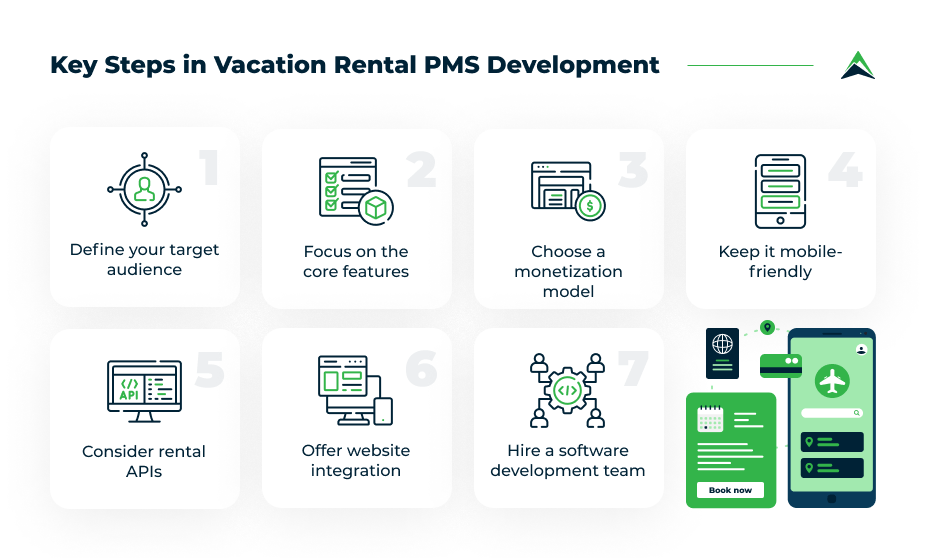
The Broader Question: What Defines the Best Vacation Rental PMS in 2026?
Zoom out from any single case study, and the conversation around the best vacation rental PMS 2026 has to offer keeps landing in the same place: alignment matters more than any feature comparison chart.
The platforms that consistently earn praise tend to share a few traits — dependable automation, solid multi-channel reach, responsive support, room to grow, and enough visibility that nothing slips through the cracks. But none of that guarantees a fit for every business. Property count, team size, growth ambitions, and plain old management style all shape which platform actually feels right — and none of those show up on a features page.
Case Study #2: A Professional Management Company in Scottsdale
Sarah’s story starts in a similar place to Michael’s — five properties, steady growth — but it doesn’t stay similar for long. Her Arizona-based management company eventually grew into a portfolio spanning multiple property owners, dedicated maintenance teams, and rotating cleaning crews. The problems that came with that scale looked nothing like a family managing three cabins.
Owner statements needed to go out reliably every month. Staff needed different permission levels depending on their role. Maintenance requests needed tracking across teams that didn’t always talk to each other directly. Standard procedures needed to exist on paper, not just in someone’s memory. Simple automation — the kind that had saved Michael’s family so much time — wasn’t nearly enough here. Sarah’s company needed infrastructure.
When her leadership team sat down to weigh Hostaway against Guesty, the conversation kept circling back to one question: what does this company look like in five years, not next quarter? That single reframe changed which features actually mattered.
Guesty won out, largely because of what it offered for multi-user environments, enterprise-level workflows, tighter operational controls, and reporting sophisticated enough for owners who wanted real numbers, not summaries. Yes, the learning curve was steeper, and rolling it out took real planning rather than a weekend of setup. But it matched where the company was heading, not just where it stood.
Sarah later summed up the difference in a way that’s stuck with other operators who’ve heard her story: Hostaway would have been the easier platform to adopt. Guesty was the platform they could actually grow into. That’s not a knock against Hostaway — it’s a reminder that “easier to start with” and “built for where you’re going” aren’t always the same platform.
What Both Stories Add Up To
Put Michael’s and Sarah’s experiences side by side, and a few patterns emerge that apply well beyond these two specific businesses.
The size of your operation today says more about which platform fits than any pricing page does — a three-property host and a thirty-property management company aren’t shopping for the same thing, even if they’re both typing “Hostaway vs Guesty” into Google. It’s also worth resisting the pull toward whichever platform simply has more features. Unused capability doesn’t sit quietly in the background; it shows up as confusion during onboarding and as costs nobody budgeted for.
Automation, too, only works on top of processes that already exist. If cleaning coordination, guest communication, or pricing decisions are inconsistent before a new platform arrives, that inconsistency doesn’t disappear — it just gets automated, inconsistencies and all. This is the same groundwork that matters when weighing short-term versus long-term rental strategies before deciding how far to scale a portfolio in the first place. And in both Michael’s and Sarah’s stories, the platform that ultimately worked was the one their team actually opened every day — not necessarily the one that looked most impressive in a sales demo.
Implementation Steps
Whichever direction you lean, the rollout itself benefits from a bit of structure rather than diving in headfirst.
Start by documenting how things actually work right now — reservation handling, messaging habits, cleaning coordination, and financial reporting, warts and all. It’s hard to evaluate a new system against an operation you haven’t honestly mapped out. From there, get specific about where the business is headed: staying small on purpose, adding properties, bringing on staff — each answer nudges the decision differently.
Once you know what you’re solving for, separate the must-haves from the nice-to-haves. Automated messaging, channel management, direct booking support, revenue reporting, and owner statements usually top the list; plenty of other features are genuinely optional depending on your setup. When it’s time to roll the platform out, resist doing it all at once — a small pilot, clearly written procedures, and room for feedback tend to beat an overnight switch for every property at once. And treat the decision as ongoing rather than final: a quarterly check-in on what’s working, what isn’t, and what new integrations might help keeps the system from quietly falling out of date.
Tools Used Alongside PMS Platforms
A property management system rarely operates in isolation — most U.S. hosts end up running it alongside a small stack of other tools.
Dynamic pricing software handles seasonal adjustments and event-driven rate changes, and it works best once you already understand occupancy benchmarks for your specific city rather than guessing at what “good” looks like. A direct booking website, paired with email marketing and repeat-guest outreach, helps reduce dependence on any single marketplace. Separate accounting software still handles owner reporting, tax prep, and expense tracking more cleanly than most PMS platforms manage on their own. And internal communication — team messaging, task tracking, maintenance coordination — usually runs alongside dedicated cleaning coordination software rather than being replaced by the PMS entirely.
Guesty Alternatives for Small Hosts
Not every host needs either platform, and the search for guesty alternatives for small hosts reflects a real gap in the market — a lot of independent operators are simply over-served by enterprise tools.
Hostaway itself often fills that gap for hosts past the single-property stage but not yet running a full management company — strong automation without the enterprise learning curve. For hosts even earlier than that, lighter platforms built specifically for small operators tend to fit better; Capterra’s property management software listings are a reasonable starting point for browsing what exists at that smaller scale. Some hosts skip a unified platform altogether and stitch together Airbnb’s native tools with separate pricing software — less elegant, but genuinely cheaper while the portfolio stays small.
The right answer here really does come down to scale, not reputation.
Mistakes to Avoid
A handful of missteps show up again and again in these decisions, regardless of which platform a host eventually picks.
Choosing a platform because it’s the “serious” or well-known option, rather than because it fits, tends to backfire quietly over months rather than immediately. So does picking purely for today’s needs and ignoring where the business is headed — that’s exactly what forced Michael’s family into a full re-evaluation four years in. Training gets underestimated constantly; people need real time to adjust, not just an onboarding email. And no software fixes a process that was broken before the software arrived — automating chaos just produces faster chaos. Finally, judging a platform purely by its monthly fee misses most of the actual value equation, which lives in time saved and errors avoided far more than in the invoice itself.
Frequently Asked Questions
Which platform is better: Hostaway or Guesty?
Neither wins outright. Hostaway tends to suit growing independent operators, while Guesty tends to fit larger management organizations with more complex operational needs.
What is the best vacation rental PMS in 2026?
Conversations about the best vacation rental PMS 2026 has to offer increasingly focus on fit rather than feature count. The right system depends on business size, staffing structure, and growth goals.
Is Hostaway worth the cost?
A fair hostaway pricing review weighs time savings, automation benefits, and scalability against the subscription fee — not just the invoice on its own. For most growing operators, the efficiency gained justifies the cost.
What are good Guesty alternatives for small hosts?
Common guesty alternatives for small hosts include lighter, simpler platforms built for smaller portfolios, where enterprise-level features would mostly go unused.
Should new hosts implement a PMS immediately?
Most single-property owners get by fine with simpler tools at first. A dedicated PMS tends to earn its place as complexity — more properties, more staff, more channels — starts to build up.
Conclusion
Strip away the comparison charts, and the real question behind Hostaway vs. Guesty isn’t which platform is objectively better — it’s which business you’re actually running.
Michael needed something that wouldn’t overwhelm a family still finding its footing. Sarah needed infrastructure built for a company with owners to report to and teams to coordinate. Different platforms, same underlying logic: match the tool to the business you have today, not the one you imagine having someday.
Before you decide for your own property, get honest about three things — how many listings you’re actually managing right now, how fast you genuinely expect to grow, and how much new complexity your team can absorb without burning out. Those three answers will point you toward the right platform far more reliably than any feature checklist ever could



Leave a Reply