
Choosing between short term rental vs long term rental isn’t just a lifestyle preference—it’s one of the biggest financial decisions property owners across the United States face. Should you list your property on Airbnb, or hand it over to a tenant on a twelve-month lease? There’s no shortage of conflicting advice out there.
Here’s the truth: neither option is “better” in a vacuum. A beachfront condo in Destin, Florida might thrive as a nightly rental, while a duplex in a quiet Ohio suburb could struggle to fill even one short-term booking a month. The right call depends on your property, your local market, and honestly, how hands-on you want to be.
This breakdown walks through the real numbers behind short term rental vs long term rental strategies—income potential, taxes, workload, and risk—so U.S. property owners can make a decision based on facts instead of guesswork.

Understanding the Core Difference
At the most basic level, the distinction comes down to lease duration and operational style.
Short-term rentals typically host guests for a few nights to a few weeks. Platforms like Airbnb and other vacation rental marketplaces make these stays possible across American cities and tourist destinations, with frequent guest turnover and hospitality-focused operations.
Long-term rentals generally involve leases lasting six months to a year or longer. Tenants treat the property as their primary residence, and landlords focus more on maintenance and lease management than guest experiences.
The decision goes far beyond occupancy length. It impacts nearly every aspect of owning investment property in the U.S.
What Defines a Short-Term Rental?
A short-term rental usually includes:
Furnished accommodations
Nightly or weekly pricing
Guest communication and support
Professional cleaning between stays
Dynamic pricing adjustments
Seasonal demand fluctuations
Owners essentially operate a hospitality business rather than simply collecting rent.
What Defines a Long-Term Rental?
Long-term rentals commonly feature:
Fixed monthly rent
Annual lease agreements
Lower turnover
Minimal furnishing requirements
Predictable cash flow
Reduced operational involvement
The model resembles traditional real estate investing with fewer daily responsibilities.
Short-Term Rental vs Long-Term Rental at a Glance
| Factor | Short-Term Rental | Long-Term Rental |
|---|---|---|
| Income Potential | Higher | Moderate |
| Cash Flow Stability | Variable | Predictable |
| Management Effort | High | Lower |
| Furnishing Required | Yes | Usually No |
| Flexibility | High | Limited |
| Guest/Tenant Turnover | Frequent | Infrequent |
| Tax Complexity | Higher | Lower |
| Personal Property Access | Possible | Limited |
This comparison highlights why the best strategy depends on your priorities rather than a universal formula.
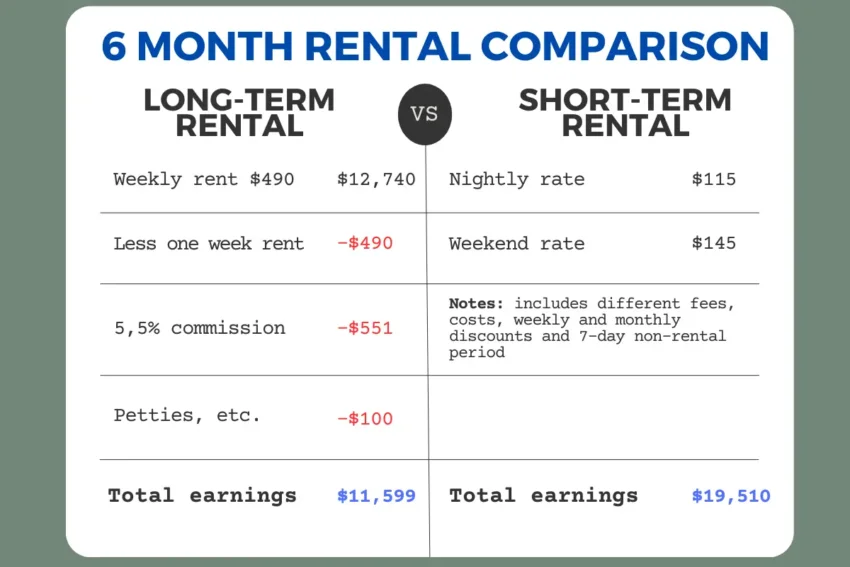
Short Term Rental Income vs Long Term: Which Makes More Money?
The question most U.S. investors ask is simple: which option generates higher returns?
The answer depends on location, occupancy, local regulations, and management efficiency.
In many American tourism-heavy markets, short-term rentals can outperform traditional leases on gross revenue. Charging $250 per night for a property that maintains healthy occupancy often exceeds what a monthly tenant would pay.
However, revenue and profit are not the same thing.
The Revenue Advantage of Short-Term Rentals
Short-term hosts benefit from:
Premium nightly rates
Surge pricing during holidays
Event-driven demand increases
Seasonal optimization
Multiple income streams through add-ons
A host near a major U.S. sports venue, national park, or beach destination may earn several months of traditional rent during peak seasons.
This explains why discussions around short term rental income vs long term remain so active among American investors.
The Expense Side of the Equation
Higher income also creates higher expenses.
Short-term rental costs often include:
Professional cleaning fees
Furniture replacement
Guest amenities
Smart locks and automation tools
Insurance premiums
Utility bills
Internet services
Property management fees
Long-term landlords typically transfer many expenses to tenants or spread them across much longer periods.
Cash Flow Stability
Long-term rentals excel in predictability.
Receiving consistent monthly rent creates easier budgeting and financing opportunities. Short-term hosts may experience significant seasonal swings, with exceptional summers followed by slower off-seasons—something especially true in seasonal U.S. markets like ski towns or beach communities.
Investors seeking dependable income frequently value stability over maximum earning potential.
Is Airbnb More Profitable Than Renting?
One of the most common questions U.S. property owners ask is: is Airbnb more profitable than renting?
The honest answer is: yes—sometimes.
Airbnb and other short-term platforms can generate significantly higher profits when several factors align:
Strong tourism demand
Favorable local regulations
Effective pricing strategies
Outstanding guest experiences
Efficient operational systems
However, profitability can quickly disappear if occupancy falls or city regulations tighten. It’s worth checking short-term rental regulations by state before assuming a market will stay favorable long-term.
Situations Where Airbnb Usually Wins
Short-term hosting often outperforms traditional renting when properties are located:
Near beaches and vacation destinations
Close to convention centers
Adjacent to national parks
In major U.S. event markets
Within walkable tourist districts
Daily pricing flexibility creates opportunities impossible under annual leases.
Situations Where Long-Term Rentals Win
Traditional renting tends to perform better when:
Local governments restrict short-term rentals
Tourism demand remains weak
Management resources are limited
Owners live far away
Financing structures favor stable income
For many investors, reducing stress outweighs maximizing revenue.
The Hybrid Approach
An increasing number of U.S. owners combine both models.
Examples include:
Operating as a vacation rental during peak seasons.
Offering monthly furnished stays during slower periods.
Hosting traveling nurses or corporate professionals.
Transitioning into annual leases when market conditions change.
Flexibility itself can become a competitive advantage.
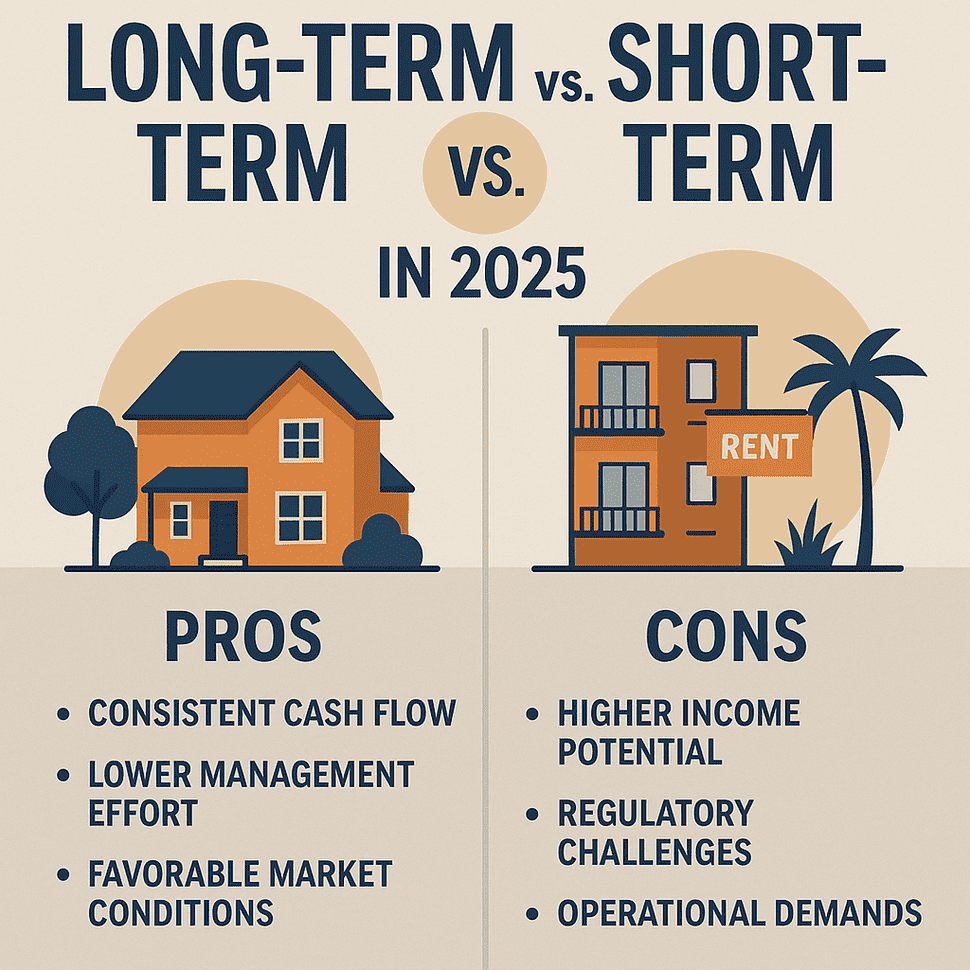
Pros and Cons of Short Term Rental Ownership
Before entering hospitality operations, investors should carefully evaluate the pros and cons of short term rental ownership.
Pros
Higher Revenue Potential
Nightly rates frequently exceed equivalent monthly rents on a per-day basis.
Personal Property Access
Owners can block dates for vacations, maintenance projects, or family visits.
Dynamic Pricing Opportunities
Festivals, holidays, and local events create meaningful income spikes.
Better Property Oversight
Frequent cleaning and inspections help identify issues earlier.
Tax Planning Flexibility
Depending on ownership structure and usage patterns, certain expenses may receive favorable treatment under U.S. tax law.
Cons
Greater Workload
Guest communication rarely stops. Messages arrive at night, on weekends, and during holidays.
Income Volatility
Economic downturns or travel disruptions directly impact occupancy.
Regulatory Challenges
Many U.S. cities continue introducing new licensing requirements, occupancy limits, and zoning restrictions.
Higher Operating Costs
Utilities, maintenance, cleaning, and guest supplies reduce overall margins.
Increased Wear and Tear
Dozens—or hundreds—of guests each year naturally create more usage than a single long-term tenant.
Advantages and Challenges of Long-Term Rentals
Long-term rentals remain popular across the U.S. because simplicity carries enormous value.
For many investors, predictable income and lower involvement outweigh the potential upside of short-term hosting.
Key Benefits
Predictable Income
Stable monthly payments improve financial planning and simplify budgeting. Mortgage payments, maintenance reserves, and investment projections become easier to manage when revenue remains consistent.
Lower Management Demands
Fewer turnovers mean fewer operational headaches. Landlords typically avoid frequent cleaning schedules, guest communication at all hours, dynamic pricing adjustments, and constant marketing efforts.
Reduced Marketing Costs
Once a qualified tenant signs a lease, there is little need for ongoing advertising or promotional activity.
Minimal Furnishing Expenses
Many long-term rentals operate successfully without expensive furniture packages, linens, or guest amenities.
Easier Financing Conversations
U.S. lenders often favor predictable lease income when evaluating investment properties.
Potential Drawbacks
Limited Flexibility
Reclaiming personal use or changing strategies may require waiting until leases expire.
Slower Rent Growth
Annual agreements restrict rapid pricing adjustments compared to nightly rates.
Problem Tenants
Difficult tenant situations can persist for months or years if not handled properly.
Vacancy Risks
Extended vacancies between tenants reduce annual returns and create financial pressure.
The challenges differ from short-term rentals—they are not necessarily smaller.
Short Term Rental vs Long Term Rental Tax Considerations
Taxes represent one of the most overlooked factors when comparing investment strategies in the U.S.
Understanding short term rental vs long term rental tax implications can significantly influence net returns. The IRS guidelines on rental income are a useful starting point for understanding federal reporting obligations under either model.
Short-Term Rental Tax Factors
Short-term hosts may encounter:
Local lodging taxes
Occupancy taxes
Sales tax obligations
Self-employment considerations in certain cases
Material participation requirements
Common deductions often include:
Cleaning services
Internet expenses
Furniture purchases
Guest amenities
Platform commissions
Property management fees
Utility costs
Long-Term Rental Tax Factors
Traditional landlords generally focus on:
Rental income reporting
Mortgage interest deductions
Property depreciation
Maintenance expenses
Insurance costs
Property taxes
The process is often simpler than hospitality-related tax reporting.
State and Local Rules Matter
Regulations vary dramatically across the United States.
A property in Florida may face entirely different requirements than one in California, New York, or Arizona.
Before choosing a strategy, understand:
Licensing requirements
Occupancy taxes
Zoning restrictions
Local reporting obligations
Business registration rules
Proper planning today prevents expensive surprises later, especially since more U.S. cities are updating short-term rental ordinances every year.
Management Requirements: Hospitality vs Landlord Operations
The operational difference between these models is enormous.
Running a Short-Term Rental Business
Success requires systems.
Many U.S. hosts eventually implement:
Automated guest messaging
Smart lock technology
Dynamic pricing software
Cleaning coordination tools
Maintenance scheduling systems
Review management processes
Without automation, scaling becomes difficult.
Running Long-Term Properties
Long-term management focuses on:
Tenant screening
Lease administration
Rent collection
Maintenance coordination
Legal compliance
Property inspections
The work occurs less frequently but often involves more administrative responsibilities.
Tools That Make Either Model Easier
Regardless of strategy, technology can simplify ownership for American property owners.
Helpful systems may include:
Property management software
Accounting platforms
Maintenance request portals
Automated communication tools
Calendar synchronization systems
Financial reporting dashboards
The right tools reduce stress, minimize mistakes, and support growth.
If you’re exploring short-term hosting, investing in automation early often prevents burnout once bookings increase.
How to Choose the Right Strategy
No universal answer exists.
The best approach depends on your goals, personality, local market, and financial priorities.
Do You Want Maximum Income or Maximum Predictability?
Higher revenue potential usually comes with greater volatility.
Predictable cash flow often means sacrificing upside.
Understanding your risk tolerance is essential.
How Involved Do You Want to Be?
If you enjoy hospitality, guest experiences, interior design, operations management, and pricing strategies, short-term rentals may align with your interests.
If you prefer passive investing, traditional leasing may be more attractive.
What Does Your Local Market Support?
Analyze:
Tourism demand
Hotel competition
Seasonal patterns
Population growth
Local regulations
Employment trends
The market frequently determines the best strategy more than personal preference—this is especially true across diverse U.S. regions, where regulations and tourism demand can differ from state to state.
Are You Building a Lifestyle Business or an Investment Portfolio?
Some owners love hosting. Others simply want dependable returns.
Neither goal is superior—they serve different objectives.
Which Rental Model Is Right for You?
Choose a Short-Term Rental If:
☑ Your market attracts tourists.
☑ You enjoy guest interaction and hospitality.
☑ You want flexible access to your property.
☑ You can manage higher operational demands.
☑ You aim to maximize income potential.
☑ Seasonal pricing opportunities exist.
Choose a Long-Term Rental If:
☑ Predictable income matters most.
☑ You prefer lower management responsibilities.
☑ Local regulations restrict vacation rentals.
☑ Passive investing is your primary objective.
☑ You live far from the property.
☑ Stability outweighs growth opportunities.
This simple framework helps U.S. investors align strategy with lifestyle preferences.
Frequently Asked Questions
Is a short-term rental always more profitable than a long-term rental?
No. While short-term rentals can generate higher revenue, expenses, occupancy fluctuations, and regulations may reduce profitability. Local U.S. market conditions ultimately determine performance.
Can I switch from long-term renting to Airbnb later?
Yes, provided local laws permit short-term rentals. Many American investors begin with traditional leases and transition into vacation hosting as opportunities emerge.
What is the biggest risk with short-term rentals?
Income volatility and regulatory changes remain among the largest risks. U.S. cities can introduce restrictions that affect future earnings.
Do short-term rentals require more maintenance?
Generally, yes. Frequent guest turnover creates additional cleaning requirements, maintenance checks, and wear on furnishings and amenities.
How do taxes differ between short-term and long-term rentals?
Short-term hosts may face lodging taxes, occupancy taxes, and more complex reporting requirements, while long-term rentals generally follow traditional landlord tax rules. Professional guidance is recommended for property-specific situations.
Choosing the Rental Model That Fits Your Goals
At the end of the day, this isn’t a competition with one winner. It’s a fit question.
Chase higher income and don’t mind the extra work? Short-term hosting probably makes sense for you. Want your rental check to show up like clockwork without late-night guest messages? A long-term lease will likely serve you better.
Before you commit either way, run the actual numbers for your specific property and check what your city or state allows—regulations can make or break a short-term strategy overnight across different parts of the U.S.
And if short-term hosting is the direction you’re leaning, it’s worth learning how to start a short-term rental the right way, putting together a solid amenities checklist, and setting up a cleaning system that can keep pace with frequent turnovers.
Property owners who do well long-term usually aren’t locked into one strategy forever. They’re paying attention to their market and willing to shift when it makes financial sense



Leave a Reply