Setting the right nightly rate has become one of the hardest parts of running a successful Airbnb. Price your property too high, and your calendar may stay empty while nearby competitors fill their weekends. Price it too low, and you’ll book quickly — but leave revenue on the table you’ll never recover.
How this comparison was put together: the tools below were evaluated against their publicly documented features, pricing structure, and integrations, cross-referenced against how hosts and property managers across U.S. markets — beach condos in Destin, cabins in the Smoky Mountains, downtown apartments in Nashville — actually describe using them day to day. Pricing and feature sets shift periodically, so it’s worth confirming current details directly on each provider’s site before committing.
Quick Answer
For most professional hosts, PriceLabs is the best pricing tool for Airbnb overall — it combines advanced automation, detailed customization, and strong market analytics, though it has a real learning curve. Beyond suits hosts who want simplicity with minimal setup. Wheelhouse offers flexible pricing philosophies for hosts who want to shape strategy rather than accept defaults. AirDNA works best as market research rather than day-to-day pricing automation. Airbnb’s built-in Smart Pricing is free and fine for beginners, but most growing hosts outgrow it. The right choice depends on your portfolio size, experience level, and how hands-on you want to be.
I’ve seen this play out across very different vacation rental markets. A beach condo in Destin behaves nothing like a cabin in the Smoky Mountains. An apartment in downtown Nashville responds differently to pricing than a family home near Orlando’s theme parks — demand shifts with holidays, local events, school schedules, weather, and even booking pace.
That’s why many experienced hosts eventually stop adjusting prices manually and rely on an Airbnb pricing tool that continuously analyzes market conditions and recommends — or automatically applies — better nightly rates. This guide compares today’s leading solutions and helps you choose based on your actual hosting goals rather than marketing claims.

Why Every Airbnb Host Needs a Pricing Tool
Many hosts start with one nightly rate for weekdays and another for weekends. That works fine at launch, but it rarely keeps pace with how quickly vacation rental markets actually move.
Imagine a two-bedroom property in Scottsdale. A regular Tuesday in August might justify $180. The same property during spring training or a major conference could comfortably command more than double that. Without adjusting the calendar, you risk underpricing your busiest dates or overpricing the slow ones — the same principle covered from a hands-on angle in our guide to pricing an Airbnb listing.
Manual Pricing Has Hidden Costs
Overpricing can be just as expensive as underpricing. A host charging $325 a night year-round may sit vacant during slower weeks while similar listings drop closer to $250. A host using dynamic pricing lowers rates during slower demand to keep occupancy healthy, then raises them automatically when demand spikes — often earning more annual revenue even while occasionally charging less on individual nights. Revenue management isn’t about maximizing every single night. It’s about maximizing performance across the entire year.
Revenue Is More Than Nightly Rate
Many new hosts judge success purely by Average Daily Rate (ADR). Professional operators look deeper — tracking occupancy rate, ADR, RevPAR (Revenue Per Available Rental), booking pace, average length of stay, seasonal demand, and cancellation trends together. Increasing ADR while occupancy falls sharply doesn’t automatically improve profitability, and neither does maintaining full occupancy by underpricing every weekend. The strongest strategies balance both at once.
How Airbnb Dynamic Pricing Works
One of the biggest misconceptions about dynamic pricing is that software simply copies nearby listings. Modern pricing engines are considerably more sophisticated, evaluating local booking activity, market demand, seasonality, day of the week, holidays, special events, remaining availability, booking pace, historical performance, and minimum stay requirements together — rather than applying one fixed price and forgetting about it.
Imagine a property near a college football stadium. Six months before game day, demand looks average. As hotels start selling out and nearby vacation rentals fill up, pricing algorithms detect the shift and gradually raise recommended rates — often before a host relying on manual pricing would even notice the opportunity.
Does Airbnb Have Dynamic Pricing?
Yes. Airbnb includes a built-in feature called Smart Pricing, which automatically adjusts nightly rates within limits you choose. However, many experienced hosts prefer third-party software because it offers more customization, better market analysis, and stronger revenue management tools than Airbnb’s native option. Smart Pricing focuses primarily on helping properties secure bookings; third-party tools generally provide significantly more control over strategy.
What Makes the Best Pricing Tool for Airbnb?
Every pricing platform promises to increase revenue. Few explain exactly how. Evaluating software against the same criteria produces far better decisions than choosing the most popular brand by reputation alone.
Ease of use matters differently depending on the host — some want software that works with minimal setup, others prefer adjusting rules for every season, holiday, and booking window themselves.
Pricing accuracy depends on how well the engine analyzes comparable listings, booking trends, local demand, historical performance, and competitor calendars — the more accurate the underlying data, the more confidence you can have in automated recommendations.
Customization — minimum and maximum price, weekend premiums, holiday pricing, minimum stay rules, last-minute discounts, far-out pricing, occupancy-based adjustments — lets the software reflect your actual business strategy rather than replacing it entirely.
Market data helps explain why prices should change, not just that they should — occupancy trends, competitor performance, local ADR, RevPAR estimates, and booking lead times all become more valuable as a portfolio grows, a skill covered in depth in our guide to Airbnb occupancy rates by city.
Integrations matter for hosts using more than Airbnb alone — strong pricing software connects cleanly with property management systems, channel managers, and calendar sync tools, reducing manual work while keeping pricing consistent across every platform.
| Criteria | Why It Matters |
|---|---|
| Ease of Use | How quickly a new host can start using it |
| Automation | How much pricing work the software handles |
| Customization | Ability to create advanced pricing rules |
| Market Data | Quality of local demand insights |
| Integrations | Compatibility with Airbnb, PMS platforms, and channel managers |
Top Airbnb Pricing Tools Compared
No pricing platform is perfect for every host. The right choice depends on portfolio size, how much control you want, and whether you’re chasing occupancy, ADR, or time saved through automation.
| Tool | Ease of Use | Automation | Customization | Market Data | Best For |
|---|---|---|---|---|---|
| PriceLabs | ⭐⭐⭐⭐☆ | ⭐⭐⭐⭐⭐ | ⭐⭐⭐⭐⭐ | ⭐⭐⭐⭐⭐ | Serious hosts & property managers |
| Beyond | ⭐⭐⭐⭐⭐ | ⭐⭐⭐⭐☆ | ⭐⭐⭐⭐☆ | ⭐⭐⭐⭐☆ | Hosts wanting simple automation |
| Wheelhouse | ⭐⭐⭐⭐☆ | ⭐⭐⭐⭐☆ | ⭐⭐⭐⭐⭐ | ⭐⭐⭐⭐☆ | Revenue-focused hosts |
| AirDNA | ⭐⭐⭐☆☆ | ⭐⭐☆☆☆ | ⭐⭐⭐☆☆ | ⭐⭐⭐⭐⭐ | Market research & investment analysis |
| Airbnb Smart Pricing | ⭐⭐⭐⭐⭐ | ⭐⭐⭐⭐☆ | ⭐⭐☆☆☆ | ⭐⭐⭐☆☆ | New Airbnb hosts |
PriceLabs
PriceLabs is the benchmark a lot of experienced hosts measure other tools against — highly customizable base prices, min/max rates, last-minute discounts, far-out pricing, weekend premiums, and occupancy-based rules, with genuine automation underneath it all. The trade-off is a real learning curve; new users can feel overwhelmed by the sheer number of settings at first.
Best for: professional hosts, multi-property owners, data-driven operators. For a full breakdown of setup steps, pricing tiers, and real-world results, see our complete PriceLabs review.
Beyond
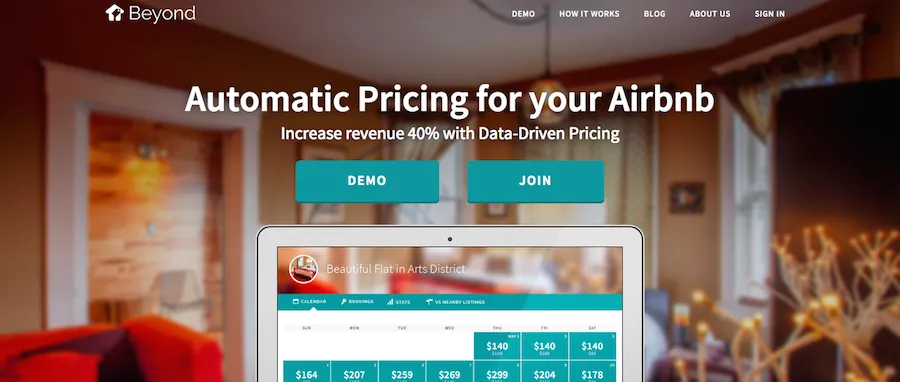
Beyond takes the opposite approach — automation and simplicity over dozens of manual settings. Its engine evaluates market demand, local events, seasonality, booking pace, and competitor activity, then updates recommendations automatically as conditions shift, without requiring constant manual review.
A beachfront condo in Destin, for example, sees demand rise dramatically over summer and soften once schools reopen — Beyond adjusts pricing up and down automatically through that cycle, which saves real time for hosts who don’t want to monitor their calendar daily.
Pros: easy setup, clean interface, strong automation, reliable demand forecasting. Cons: less granular control than PriceLabs; advanced users may want more customization. Best for: busy hosts and small portfolios who prefer automation over manual adjustment.
Wheelhouse
Wheelhouse built its reputation on flexibility — letting hosts choose a pricing philosophy (conservative, aggressive revenue growth, or occupancy-focused) rather than accepting one-size-fits-all automation. A host prioritizing steady bookings for mortgage coverage and a host running a luxury property who prefers fewer, higher-paying reservations can both use Wheelhouse with entirely different settings.
Pros: excellent customization, strong automation, user-friendly dashboard, helpful reporting. Cons: still requires real setup time, and some advanced analytics are less detailed than PriceLabs. Best for: hosts who understand their market and want software that supports their strategy rather than replacing it.
AirDNA
AirDNA approaches pricing from a completely different angle — market intelligence rather than day-to-day automation. Investors frequently use it before buying a vacation rental to estimate occupancy, revenue potential, seasonal demand, and the competitive landscape in a target market.
Pros: outstanding market research, strong investment analysis, helpful forecasting. Cons: less focused on automated pricing; better as a research tool than a daily pricing engine. Best for: investors and portfolio planning rather than active rate management.
Airbnb Smart Pricing
Every host already has access to Smart Pricing — no subscription, no integration, no complicated setup. You choose a minimum and maximum nightly rate, and Airbnb adjusts within that range based on demand, availability, and seasonality.
Many experienced hosts feel Smart Pricing prioritizes securing bookings over maximizing revenue, and in competitive markets its suggested prices sometimes trend lower than what dedicated software would recommend. For a first-time host, that’s a reasonable trade-off for zero cost and zero setup. For a growing operator, it often means leaving money on the table during peak demand.
Pros: free, extremely easy, built into Airbnb. Cons: limited customization, basic analytics, no advanced pricing rules. Best for: first-time hosts and casual single-property owners.
Airbnb Smart Pricing vs Third-Party Tools
| Feature | Airbnb Smart Pricing | PriceLabs | Beyond | Wheelhouse |
|---|---|---|---|---|
| Automation | ✅ | ✅ | ✅ | ✅ |
| Advanced Pricing Rules | ❌ | ✅ | ✅ | ✅ |
| Market Analytics | Limited | Excellent | Very Good | Very Good |
| Holiday Pricing | Basic | Advanced | Advanced | Advanced |
| PMS Integrations | Limited | Extensive | Extensive | Extensive |
| Multi-Property Support | Basic | Excellent | Excellent | Excellent |
Which Pricing Tool Is Best for Beginners?
If you’re managing your first Airbnb, Smart Pricing is a reasonable starting point simply because it’s free and needs almost no setup. Once you understand your local market and start optimizing for profitability rather than just occupancy, Beyond offers a smooth transition with stronger automation. For hosts who enjoy learning and want more control early, PriceLabs is worth the steeper learning curve — the extra flexibility tends to pay off as the business grows.
Which Pricing Tool Is Best for Multi-Property Hosts?
Managing several listings shifts priorities from convenience to consistency and scale. PriceLabs generally offers the strongest advanced rules and portfolio management for this stage. Wheelhouse suits hosts who want to tailor strategy by property type or revenue goal. Beyond works well for managers who value automation and simplicity across multiple listings without heavy manual involvement. AirDNA pairs well alongside any of these as a research layer for market analysis and expansion planning — a combination worth considering once you’re evaluating the best short-term rental software more broadly, not just pricing specifically.
How Automated Airbnb Pricing Tools Increase Revenue
One of the biggest misconceptions is that these tools magically increase profit. They don’t — what they do is help you make more informed pricing decisions faster and more consistently than manual pricing usually allows.
They capture high-demand opportunities. A major festival announced six months out in Austin might look like normal demand at first. As hotels fill and nearby rentals get booked, pricing algorithms detect the shift and gradually raise rates — often before a host checking manually would even notice.
They reduce empty nights. If a calendar still has open dates just a few days before check-in, most tools automatically recommend a lower rate to secure the booking — a slightly discounted reservation usually beats an empty property.
They remove emotion from pricing. Many hosts hesitate to lower prices because they feel their property is worth more. Software has no such bias — it evaluates market conditions objectively, which tends to produce better long-term revenue decisions than gut feeling alone.
Mistakes Hosts Make With Dynamic Pricing
Treating automation like autopilot. Dynamic pricing should support your strategy, not replace it entirely — review recommendations before holiday weekends, major local events, peak travel seasons, and large conventions specifically, since local knowledge still matters.
Setting unrealistic price limits. A minimum set too high, or a maximum set too low, leaves the algorithm with little room to actually respond to real market changes.
Ignoring minimum stay rules. Nightly pricing and stay restrictions work together — a two-night minimum during slow weekdays and a four-night minimum over New Year’s can both increase revenue while reducing turnover costs, a workflow covered in our Airbnb cleaning checklist.
Never reviewing performance. Even the best pricing software isn’t set-it-and-forget-it — reviewing occupancy rate, ADR, RevPAR, booking lead time, and average length of stay monthly is what tells you whether the strategy is actually improving.
Expert Tips for Maximizing Airbnb Revenue
Know your market before changing prices. A ski cabin, a beach house, and a downtown apartment follow completely different demand patterns — understand local seasonality, peak events, typical booking windows, and guest demographics before adjusting aggressively.
Don’t compete on price alone. Guests compare reviews, photos, amenities, location, and response time just as much as rate — improving your listing itself can justify a higher nightly rate without sacrificing occupancy.
Review pricing rules every quarter, since markets evolve, new competitors enter, and local events change throughout the year.
Use pricing data alongside guest feedback. If guests consistently mention exceptional value, there may be room to raise rates. If they mention outdated furnishings or missing amenities, improving the property may generate a better return than adjusting price alone.
Think in terms of annual revenue, not one great weekend. A strategy balancing occupancy, ADR, and RevPAR across the whole calendar usually outperforms chasing the single highest nightly rate available.
Frequently Asked Questions
What is the best pricing tool for Airbnb?
For many professional hosts, PriceLabs is the strongest overall choice, combining advanced automation, customization, and market analytics. Beyond suits hosts who prefer simplicity, while Wheelhouse offers flexible pricing philosophies. The best fit depends on experience level, portfolio size, and revenue goals.
Does Airbnb have dynamic pricing?
Yes. Airbnb includes Smart Pricing, a built-in feature that adjusts nightly rates within the minimum and maximum you set — though it offers fewer customization options than dedicated third-party tools. Current details are available on Airbnb’s Smart Pricing help page.
Are Airbnb pricing tools worth it?
For many hosts, yes — even a modest improvement in occupancy or ADR can offset the subscription cost, especially in competitive markets or for hosts managing multiple properties.
What is better than Airbnb Smart Pricing?
If you need more control, PriceLabs, Beyond, and Wheelhouse generally offer stronger revenue management, more advanced pricing rules, richer market data, and better integrations than Airbnb’s native option. Independent comparisons on Capterra’s revenue management software listings are worth a look for a broader market view.
Conclusion
Choosing the best pricing tool for Airbnb comes down to matching software to how you actually host, not chasing the platform with the longest feature list.
If you’re starting out and want a simple, no-cost option, Smart Pricing is a fine way to get familiar with dynamic pricing. As the business grows, Beyond offers an easy transition with stronger automation, Wheelhouse gives more flexibility for hosts who want to shape their own strategy, and PriceLabs stands out for depth and customization once you’re managing multiple listings seriously.
No pricing tool replaces thoughtful hosting or a genuinely good guest experience — strong reviews, professional photos, and responsive communication still carry real weight in booking performance. The most successful hosts treat pricing software as a decision-support system, combining accurate market data with local knowledge and a habit of reviewing performance regularly, rather than expecting the algorithm to do all the thinking alone.
Final Recommendations
| Host Type | Best Choice | Why |
|---|---|---|
| New Airbnb Host | Airbnb Smart Pricing | Free, simple, easy to activate |
| Busy Single-Property Host | Beyond | Strong automation with minimal setup |
| Experienced Host | Wheelhouse | Flexible pricing strategies and good customization |
| Multi-Property Manager | PriceLabs | Advanced rules, analytics, and portfolio management |
| Vacation Rental Investor | AirDNA + PriceLabs | Market research combined with automated pricing |


Leave a Reply