A one-night booking and a five-night booking generate wildly different economics for a host, even at an identical nightly rate — one turnover instead of five, one set of linens instead of five, one guest interaction instead of five separate check-ins. Airbnb minimum stay settings exist precisely to give hosts control over that math, yet a lot of hosts either ignore the setting entirely or set it once at launch and never revisit it as demand patterns shift throughout the year.
Quick Answer
Airbnb minimum stay is a setting that requires guests to book at least a certain number of nights before a reservation can be made, ranging from a simple one-night minimum to week-long or monthly requirements for peak periods. Setting it too high reduces the pool of guests who can book at all; setting it too low invites excessive turnover that eats into cleaning margins and increases operational strain. Most successful hosts vary their minimum stay by season and day of week rather than applying one fixed number year-round — tighter during high-demand holiday weekends, looser during slow shoulder seasons.
What Is an Airbnb Minimum Stay?
An Airbnb minimum stay requirement sets the fewest number of nights a guest must book to reserve a property for specific dates. A host can apply one minimum stay across the entire calendar, or — more effectively — vary it by date range, weekday versus weekend, and season, giving considerably more control over both occupancy patterns and operational workload than a single fixed number allows.
This setting sits alongside nightly rate as one of the more underused levers in a host’s pricing toolkit, a gap covered from the broader revenue angle in our guide to pricing an Airbnb listing. Rate gets constant attention; minimum stay requirements often get set once during initial listing setup and then forgotten entirely.
Why Minimum Stay Requirements Matter
Turnover cost adds up fast. Every checkout triggers a cleaning cost, whether that’s paid labor or a host’s own time — a topic covered in detail in our guide to Airbnb cleaning fees. A property booked as five separate two-night stays costs considerably more in cleaning and turnover labor than the same ten nights booked as a single reservation, even though the total nightly revenue can look identical on paper.
Guest quality shifts with stay length. Longer-stay bookings tend to attract a different traveler profile — families on planned vacations, remote workers, or guests genuinely settling in for a real trip — compared to the occasionally higher-risk behavior associated with very short, last-minute one-night stays, particularly around holiday weekends.
Calendar gaps get harder to fill with an overly strict minimum. A three-night minimum applied uniformly can leave an awkward one- or two-night gap between existing reservations completely unbookable, quietly reducing occupancy in a way that’s easy to miss without actively reviewing the calendar.
How to Set Minimum Nights on Airbnb
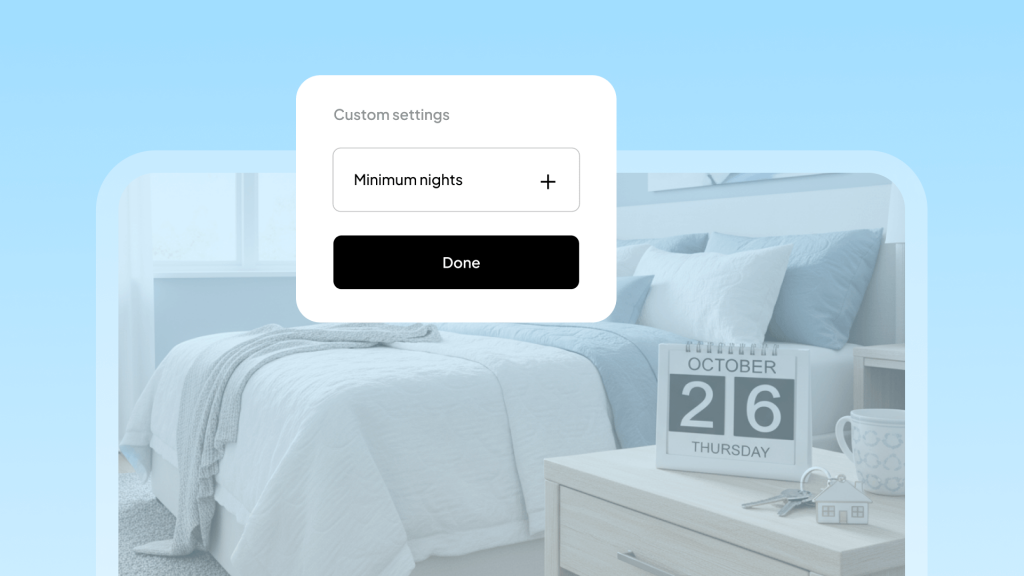
Adjusting this setting is straightforward through Airbnb’s own dashboard, though the exact navigation path shifts occasionally as the app updates. From your listing, go to Availability, then locate Trip Length, where you can set a default minimum stay for the entire calendar and, separately, customize minimums for specific date ranges.
For date-specific overrides — a longer minimum over a holiday weekend, for example — most hosts use the calendar view directly, selecting the specific dates and applying a custom minimum stay just for that range rather than changing the default setting across the whole year. Airbnb’s own help documentation covers the current exact steps, since menu labels and navigation shift periodically with app updates.
Airbnb Minimum Stay Strategy by Season
Peak and holiday periods generally support a longer minimum stay without hurting occupancy, since demand exceeds available inventory anyway — a three- or four-night minimum over a major holiday weekend often increases total revenue per booking without meaningfully reducing how quickly those dates fill.
Shoulder seasons typically benefit from a shorter minimum, since demand is softer and an overly strict requirement can leave dates empty that would otherwise fill with a shorter, more flexible booking window.
Weekday versus weekend patterns matter too, particularly in destination markets. Some hosts apply a two-night weekend minimum (since a single Saturday-only booking is rare and often low-value) while allowing single-night weekday stays to fill gaps that would otherwise sit vacant.
Off-season or slow periods sometimes benefit from removing minimum stay requirements almost entirely, prioritizing occupancy over per-booking efficiency when the alternative is an empty property generating zero revenue at all.
Balancing Minimum Stay Against Occupancy
The core tension worth understanding: a longer minimum stay increases average booking value and reduces turnover cost, but it also shrinks the pool of guests who can actually book, since travelers planning a two-night trip simply can’t reserve a property requiring four nights minimum, regardless of how much they’d like to.
There’s no universal right answer here — a beachfront property in a peak summer market can support aggressive minimum stay requirements because demand genuinely exceeds supply, while a property in a less competitive market may need to stay flexible simply to keep the calendar filled at all. Reviewing actual booking patterns and gaps in the calendar regularly, rather than setting a minimum once and leaving it, produces meaningfully better results over a full year.
Common Minimum Stay Mistakes
Applying one fixed minimum year-round regardless of season, which either leaves peak-season revenue on the table or blocks bookings unnecessarily during slower periods.
Setting an aggressive minimum before establishing reviews. New listings generally benefit from more flexibility early on, since building an initial review base matters more than optimizing turnover efficiency in the first few months.
Ignoring the awkward-gap problem. A rigid minimum stay applied uniformly can leave short, unbookable gaps between existing reservations — checking the calendar periodically for these gaps and adjusting the minimum for those specific dates recovers otherwise wasted inventory.
Never revisiting the setting after initial launch. Demand patterns shift with seasons, local events, and market competition, and a minimum stay requirement that made sense at listing launch often stops reflecting current conditions within a few months.
Frequently Asked Questions
What is a good minimum stay for Airbnb?
There’s no universal number — a two-night minimum works well for many markets as a baseline, with longer minimums (three to seven nights) applied specifically during peak, holiday, or high-demand periods where demand exceeds supply.
How do I set a different minimum stay for specific dates?
Use the calendar view in your Airbnb dashboard’s Availability settings to select specific date ranges and apply a custom minimum stay just for those dates, separate from your default year-round setting.
Does a longer minimum stay hurt my Airbnb occupancy?
It can, particularly outside of peak demand periods, since it excludes guests who want to book shorter trips. The trade-off between fewer bookings at higher value versus more bookings at lower per-stay value depends heavily on actual local demand.
Should new Airbnb listings use a minimum stay requirement?
Generally, newer listings benefit from more flexibility (a one- or two-night minimum) to build an initial review history quickly, shifting toward longer minimums once demand and reviews are established.
Conclusion
Airbnb minimum stay settings function as a quieter, less-discussed sibling to nightly rate — easy to set once and forget, but genuinely capable of shifting both revenue and operational workload when adjusted thoughtfully by season and demand. Reviewing this setting with the same regularity applied to pricing, rather than leaving it static from launch day, closes a gap that a lot of otherwise well-optimized listings leave sitting on the table.


Leave a Reply