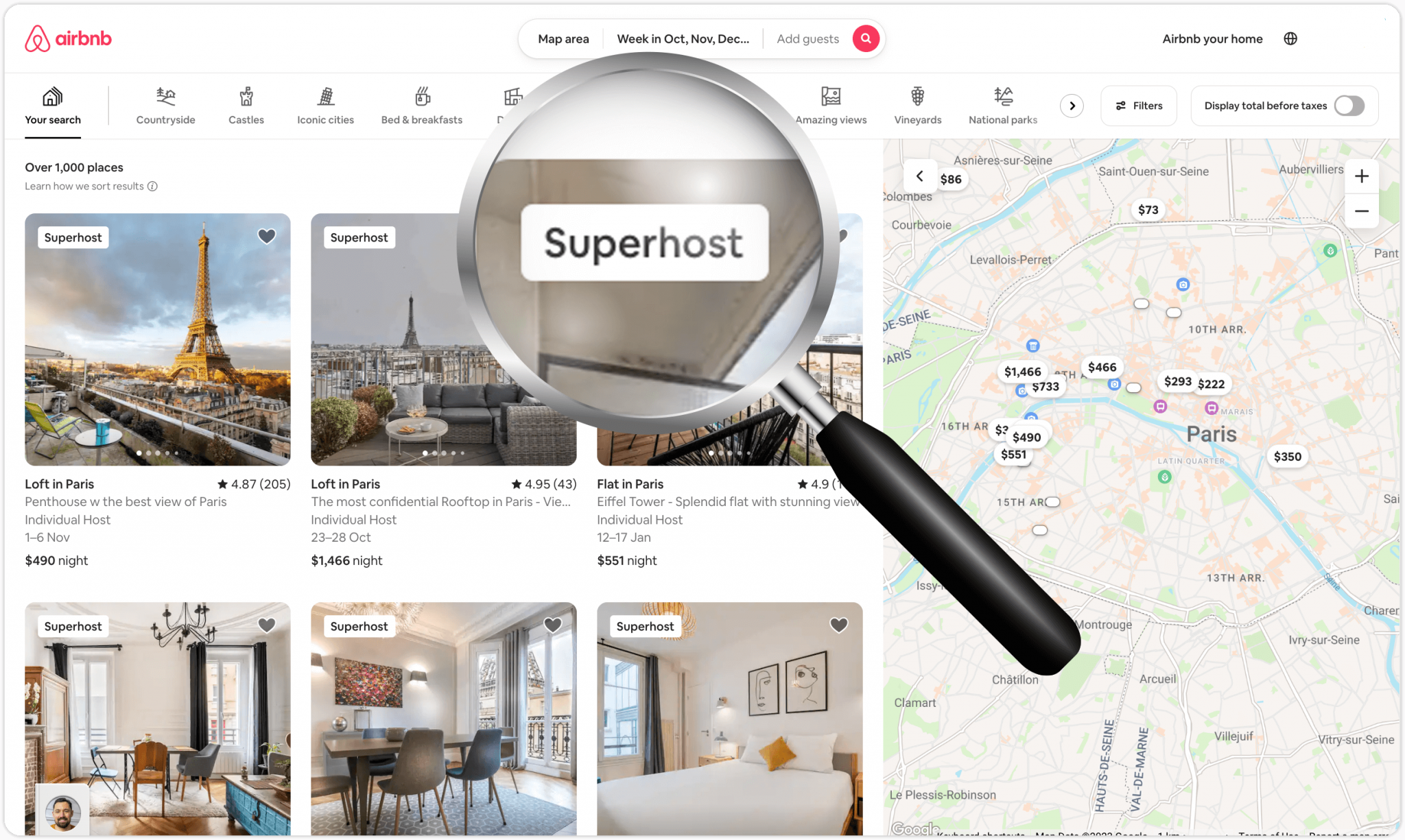
Scroll through enough Airbnb listings and you’ll notice the same small badge showing up next to the properties that seem to book fastest and hold the strongest reviews. That badge — Airbnb Superhost — isn’t just a vanity title. It’s tied to real, measurable benefits that affect visibility, guest trust, and ultimately revenue, which is exactly why so many hosts actively chase the status rather than treating it as a nice-to-have.
Quick Answer
Airbnb Superhost is a status awarded to hosts who meet specific performance thresholds every quarter — a minimum number of completed stays, a 4.8+ overall rating, less than 1% cancellation rate, and a 90%+ response rate. Superhost status comes with real benefits: a visible badge on listings, a search visibility boost in Airbnb’s algorithm, a bonus in Superhost-exclusive perks, and increased guest trust that often translates into higher booking conversion. Requirements are reassessed quarterly, meaning hosts can gain or lose the status based on trailing 12-month performance, so consistency matters more than any single great month.
What Is Airbnb Superhost?
Airbnb Superhost is a recognition program built into the platform that identifies hosts who consistently deliver excellent guest experiences. It’s not a one-time achievement — Airbnb evaluates every host’s performance quarterly against a fixed set of metrics, and status can be gained or lost each cycle based on trailing performance over the prior twelve months.
The badge itself shows up directly on a host’s listings and profile, visible to every guest browsing search results. For travelers comparing several similar properties, that badge often functions as a trust shortcut — a quick signal that a host has a track record of reliability without needing to dig through every individual review first.
Airbnb Superhost Requirements
To earn or maintain Superhost status, a host must meet all of the following thresholds, evaluated over the trailing 12 months as of each quarterly assessment:
Completed a minimum of 10 trips, or 3 reservations that total at least 100 nights, across the evaluation period. This threshold exists to ensure the status reflects genuine, sustained hosting activity rather than a handful of lucky reviews.
Maintained a 4.8 or higher overall rating, calculated across all reviews received during the period. This is typically the requirement hosts find most challenging, since a handful of lower ratings from otherwise satisfied guests can meaningfully drag down an average, especially for hosts with a smaller total review count.
Kept a cancellation rate below 1%, with very limited exceptions for extenuating circumstances Airbnb recognizes (such as a genuine documented emergency). Host-initiated cancellations, even rare ones, count heavily against this threshold because Airbnb treats reliable availability as core to guest trust.
Responded to at least 90% of new messages within 24 hours. This requirement rewards responsiveness specifically — a host who’s slow to reply, even if the eventual response is thoughtful, can fall short of this threshold and lose Superhost eligibility as a result.
All four requirements must be met simultaneously — falling short on just one, even while excelling at the others, means Superhost status isn’t awarded or is lost at the next quarterly review.
How to Become a Superhost on Airbnb
Understanding how to become a Superhost on Airbnb starts with treating each requirement as a distinct operational goal rather than hoping strong hosting instincts alone will get you there.
Build response speed into your workflow from day one. Automated messaging that acknowledges inquiries immediately, even before a full personalized response follows, protects the 90% response rate requirement without requiring you to be glued to your phone constantly — a system covered in full in our guide to automating Airbnb messages.
Protect your cancellation rate fiercely. Before accepting a reservation, be realistic about whether the dates genuinely work — a last-minute cancellation, even for a legitimate reason, can knock a host out of Superhost range for an entire evaluation period. Building buffer time into turnover schedules and confirming property readiness before opening a date for booking both reduce the odds of an emergency cancellation later.
Chase the 4.8 rating through the guest experience itself, not review requests. Ratings follow naturally from cleanliness, accurate listing descriptions, comfortable amenities, and smooth communication — the fundamentals covered in our Airbnb amenities checklist and cleaning checklist template. A property that consistently delivers what the listing promises earns strong ratings organically, which is far more sustainable than hoping guests round up out of generosity.
Set realistic guest expectations before they arrive. A significant share of low ratings trace back to mismatched expectations rather than genuine property problems — a listing description that’s honest about noise, parking, stairs, or other quirks prevents the disappointment that shows up as a 3-star review later.
Track your numbers proactively rather than waiting for the quarterly notification. Airbnb’s host dashboard shows current standing against each Superhost metric in real time — checking it monthly rather than only at evaluation time catches a slipping metric early enough to correct course before it costs the status entirely.
Superhost Benefits
The benefits attached to Superhost status go beyond the badge itself, though the badge’s psychological effect on guests shouldn’t be underestimated.
Search visibility. Airbnb’s algorithm factors host performance into search ranking, and Superhost status is one of the signals that can improve a listing’s placement, particularly in competitive markets where dozens of similar properties compete for the same search results — a dynamic covered in more depth in our guide to Airbnb SEO.
Guest trust and booking conversion. Travelers comparing similar listings often use the Superhost badge as a tiebreaker, especially when reviews are otherwise close. That trust signal can translate directly into higher conversion rates on listings that might otherwise blend into a crowded search page.
A Superhost-exclusive travel credit, awarded periodically to active Superhosts, functions as a modest but real perk for hosts who also travel and book Airbnbs themselves.
Occasional early access to new features Airbnb rolls out, giving Superhosts a chance to test and adopt tools before the broader host base.
A general halo effect on guest communication. Some hosts report that guests treat interactions with a visibly Superhost-badged listing with more initial trust and patience, which can reduce friction around minor issues that might otherwise escalate into complaints.
Airbnb Superhost Status: What Happens If You Lose It
Superhost status isn’t permanent, and losing it isn’t the end of the world — but understanding what happens helps hosts respond calmly rather than panicking.
If any of the four thresholds falls short at a quarterly evaluation, the badge is removed from the listing immediately. There’s no grace period or warning window before removal, which is exactly why proactively monitoring the dashboard matters more than reacting after the fact. The good news: losing Superhost status doesn’t damage a listing’s actual review history or search ranking baseline — the qualifying metrics simply need to recover over the following evaluation periods to regain the badge.
Hosts who lose the status due to a specific, identifiable cause — a single unavoidable cancellation, a temporary dip in response rate during a personal emergency — often regain it within one or two quarters once the underlying issue is resolved and performance returns to its normal pattern.
Common Mistakes Hosts Make Chasing Superhost Status
Accepting every booking request regardless of fit, which increases the odds of a cancellation down the line if the dates or guest turn out to be a poor match for the property.
Over-promising in the listing description to drive bookings, which backfires directly against the 4.8 rating requirement once guest expectations don’t match reality.
Ignoring the response rate metric because messages eventually get answered, without accounting for the 24-hour window Airbnb actually measures against.
Treating Superhost as a one-time goal rather than an ongoing operational standard — since the evaluation is quarterly and rolling, the habits that earn the badge need to become permanent practice, not a temporary push before a review period.
Panicking over a single lost quarter instead of identifying the specific metric that slipped and correcting it methodically for the next evaluation cycle.
Frequently Asked Questions
How often does Airbnb evaluate Superhost status?
Airbnb evaluates Superhost status quarterly, based on a host’s trailing 12-month performance against all four qualifying metrics at each assessment point.
What are the exact requirements to become a Superhost?
A host needs at least 10 completed trips (or 3 reservations totaling 100+ nights), a 4.8 or higher overall rating, a cancellation rate under 1%, and a response rate of 90% or higher, all measured over the same 12-month evaluation window.
Does Superhost status improve search ranking?
Yes, Superhost status is one of several signals Airbnb’s search algorithm factors into listing visibility, though it works alongside other factors like pricing, reviews, and response speed rather than as a standalone ranking guarantee. Airbnb’s own Superhost program page outlines the current criteria directly.
What happens if I lose Superhost status?
The badge is removed from your listing at the next quarterly evaluation if any requirement falls short. It doesn’t damage your review history, and status can be regained in a future quarter once performance metrics recover.
Is it worth trying to become a Superhost with only one listing?
Yes — the requirements don’t scale with portfolio size, and a single well-managed listing can qualify just as easily as a multi-property operation, provided the host consistently meets all four thresholds.
Conclusion
Airbnb Superhost status rewards exactly the fundamentals that make a hosting business genuinely successful in the first place — fast communication, reliable availability, and a guest experience that consistently earns strong reviews. Chasing the badge for its own sake rarely works well; building the operational habits that naturally produce those numbers does.
Treat Superhost as a byproduct of running a well-managed rental rather than a separate goal to game, and the badge tends to follow — along with the visibility and trust benefits that come with it.


Leave a Reply