Choosing between VRBO vs Airbnb isn’t as simple as comparing two booking websites. The platform you rely on can influence everything from your occupancy rate and guest quality to your annual revenue and how much time you spend managing reservations.
I’ve worked with hosts who swear by Airbnb because it delivers a steady stream of bookings, and I’ve also seen vacation homeowners earn better profits on VRBO by attracting families who stay a full week instead of just a weekend. In many cases, neither platform is objectively better — the right choice depends on your property, target guest, and hosting strategy.
Quick Answer
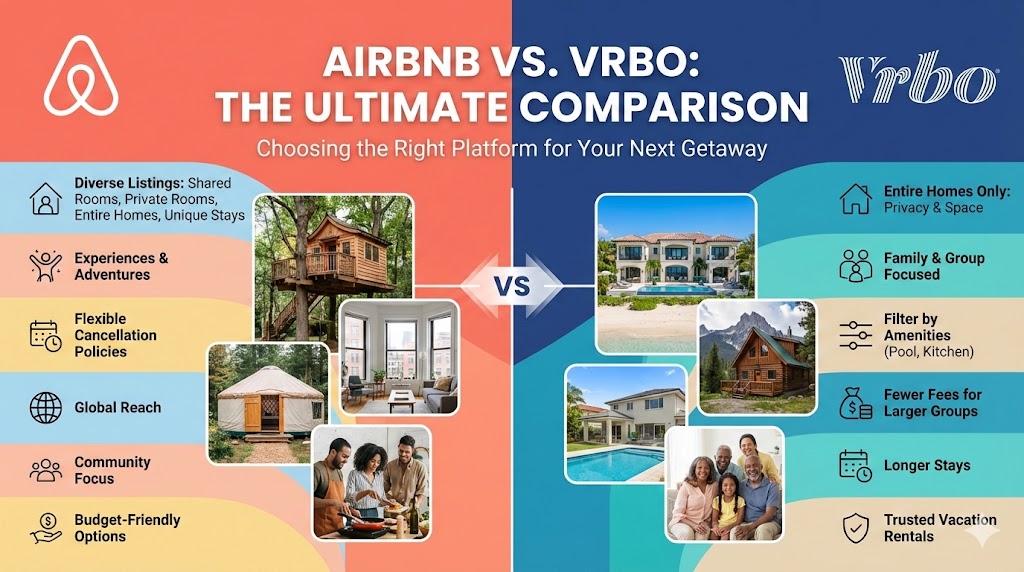
Neither platform is universally better. Airbnb generally attracts a larger, more international audience, supports more property types (rooms, apartments, unique stays), and often produces higher booking volume with shorter average stays. VRBO focuses exclusively on entire-home rentals and tends to attract families and groups booking longer vacations further in advance. City apartments, tiny homes, and unique stays typically perform better on Airbnb; beach houses, ski chalets, and large family homes typically perform better on VRBO. Many experienced hosts list on both and use a channel manager to keep calendars synchronized.
If you own a downtown apartment in Chicago, your results may look completely different from someone managing a beachfront home in Destin, Florida, or a ski cabin near Breckenridge, Colorado. That’s why broad statements like “Airbnb is always better” rarely hold up in the real world.
What Is Airbnb?
Airbnb began as a platform for people renting out spare rooms, but it’s evolved into one of the world’s largest vacation rental marketplaces — everything from studio apartments and suburban homes to luxury villas, treehouses, cabins, and boutique stays.
Airbnb’s biggest strength is flexibility. Hosts can list private rooms, shared rooms, entire homes, tiny homes, farm stays, and unique properties like yurts and houseboats — a variety that attracts solo travelers, business professionals, digital nomads, couples, families, and large groups all at once. The platform offers Instant Book, Smart Pricing tools, guest messaging, host performance insights, and an integrated review system, and connects with most property management software solutions as businesses grow.
The biggest advantage is demand. Because Airbnb operates in nearly every major travel market, a one-bedroom apartment in downtown Nashville could attract weekend tourists, concert attendees, business travelers, remote workers, and couples all in the same month. Higher demand also brings more competition, though — success in popular cities depends heavily on strong listing optimization, competitive pricing, and responsive communication.
What Is VRBO?
VRBO (Vacation Rentals by Owner) takes a different approach. Unlike Airbnb, which welcomes a wide variety of accommodation types, VRBO primarily focuses on entire-home rentals — beach houses, lakefront homes, mountain cabins, luxury vacation homes, and family vacation rentals. Guests looking for a private vacation home often choose VRBO specifically because they don’t want to share space with a host or other travelers.
This focus shapes the audience: families, multi-generational groups, friends traveling together, and guests planning week-long vacations, who typically book further in advance and stay longer than the average city traveler.
Consider a four-bedroom beach house in Destin, Florida. A family visiting for summer vacation may reserve it for seven nights or longer — compare that to an urban Airbnb listing receiving three separate two-night bookings over the same period. Total revenue might be similar, but fewer turnovers mean lower cleaning costs, less wear and tear, and considerably less coordination work.
Airbnb and VRBO Aren’t Direct Competitors for Every Property
One mistake new hosts make is assuming both platforms attract identical guests. A one-bedroom condo near downtown Austin nightlife performs exceptionally well on Airbnb because it appeals to couples and weekend visitors. A six-bedroom beachfront property in Florida often performs particularly well on VRBO because families planning annual vacations search for entire homes, not private rooms. Your property’s location, size, and target guest matter more than platform loyalty.
VRBO vs Airbnb: Quick Comparison
| Feature | Airbnb | VRBO |
| Best For | All property types | Entire vacation homes |
| Typical Guest | Solo travelers, couples, families, business travelers | Families, groups, vacationers |
| Property Types | Rooms, apartments, homes, unique stays | Entire homes only |
| International Reach | Excellent | Strong, more North America-focused |
| Average Stay Length | Often shorter | Often longer |
| Best For Urban Rentals | ⭐⭐⭐⭐⭐ | ⭐⭐⭐ |
| Best For Vacation Homes | ⭐⭐⭐⭐ | ⭐⭐⭐⭐⭐ |
| Best For Families | ⭐⭐⭐⭐ | ⭐⭐⭐⭐⭐ |
| Best For Unique Stays | ⭐⭐⭐⭐⭐ | ⭐⭐⭐ |
If your property appeals to a wide range of travelers — a city apartment, tiny home, or private room — Airbnb often provides broader exposure. If you own a spacious vacation home built for family getaways or group travel, VRBO’s audience may align more closely with your ideal guest. Many experienced hosts don’t choose one — they list on both and use a channel manager to synchronize calendars, prevent double bookings, and expand reach across channels.
VRBO vs Airbnb Fees
Fees are usually the first thing hosts compare, but neither platform uses a single fee structure for every listing — costs vary by location, pricing model, and cancellation policy. A better question than “which platform charges less” is: which platform leaves me with the highest overall profit after occupancy, nightly rates, and fees are considered?
Airbnb generally offers a split-fee model (hosts and guests each pay a service fee — the standard setup for individual hosts, covered in detail in our Airbnb host fees guide) or a host-only fee model, common among professional managers using certain software integrations, where guests don’t see a separate service fee but the host pays a higher platform fee.
VRBO offers per-booking pricing or, in some cases, an annual subscription model — hosts with frequent reservations often compare both before deciding which is more economical for their booking volume.
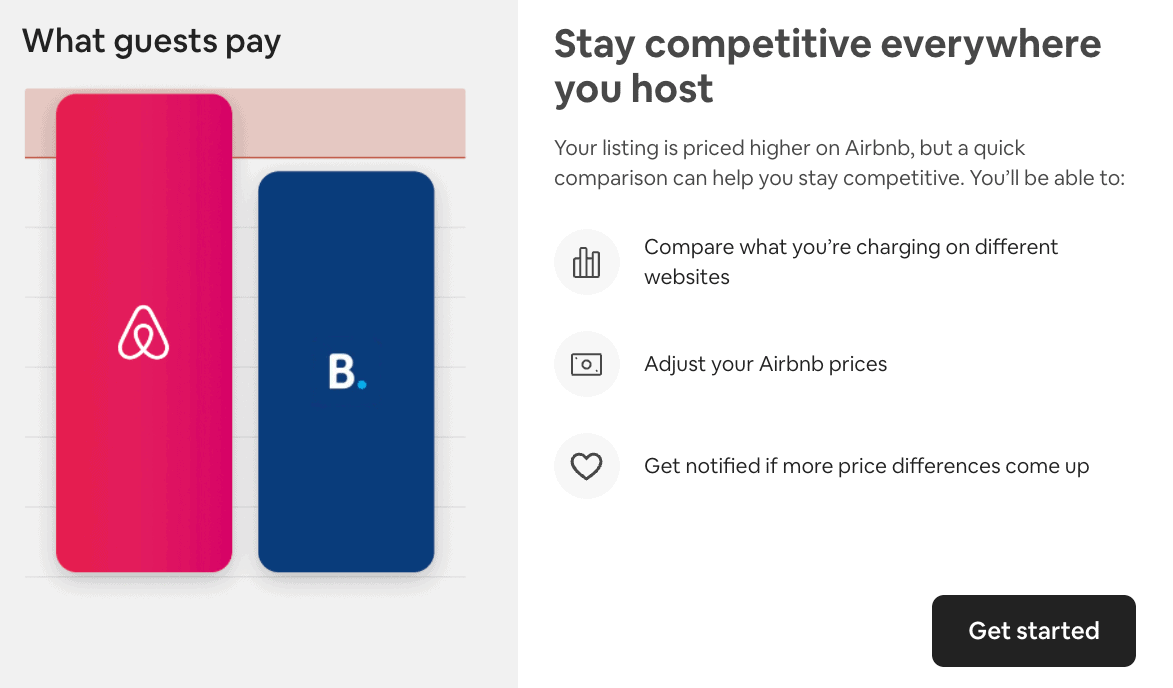
There’s no universal fee winner. A host with one property may pay less on Airbnb’s standard model, while another managing a busy beach house benefits from VRBO’s subscription option. Always compare total annual cost, not individual booking fees — and remember that fee percentages matter less than occupancy. A property earning slightly higher fees on Airbnb but landing 28 bookings a year can easily out-earn a property paying lower VRBO fees but only landing 18.
Guest-facing service fees matter too, particularly for short stays — a two-night reservation feels more expensive once cleaning and service fees are added, while a seven-night VRBO reservation spreads those costs across more nights and encounters less resistance.
Airbnb vs VRBO Insurance
Neither platform replaces a dedicated short-term rental insurance policy — both offer protection programs with real limitations, exclusions, and eligibility requirements that are worth reading carefully.
Airbnb provides programs covering certain property damage, liability claims, and guest-related incidents, though coverage depends on the specific circumstances of each claim. VRBO offers similar protection for eligible bookings, with damage protection or liability-related benefits depending on the reservation. In both cases, these programs should supplement — not replace — proper vacation rental insurance.
If you’re renting a $900,000 beach home, relying solely on platform protections isn’t a sound business decision. Claims on either platform usually require documentation, photos, and timely reporting — good record-keeping meaningfully improves your odds of a successful resolution.
Cancellation Policy, Support, and Booking Experience
Cancellation policies on both platforms range from flexible to strict, and the right choice depends on destination, seasonality, and guest type — business travelers often prefer flexible policies, while holiday vacationers booking months ahead may accept stricter terms without issue.
Customer support experiences vary on both sides. Airbnb offers a large support network and extensive help center, though response quality can vary. VRBO’s dedicated vacation rental focus helps traditional vacation home owners specifically, though experiences differ by issue complexity. Neither platform consistently outperforms the other.
Booking behavior differs meaningfully — Airbnb guests often browse experiences, unique stays, and budget-to-luxury options, encouraging exploration. VRBO guests usually arrive already knowing they want an entire vacation home, with more focused search behavior. This affects conversion rates depending on your property type.
Property Types and Search Visibility
| Property Type | Airbnb | VRBO |
| Private Room | ✅ | ❌ |
| Shared Room | ✅ | ❌ |
| Entire Apartment | ✅ | ✅ |
| Beach House | ✅ | ✅ |
| Luxury Villa | ✅ | ✅ |
| Cabin | ✅ | ✅ |
| Tiny Home | ✅ | Limited |
| Treehouse / Boutique Stay | ✅ | Rare |
If your listing is unconventional or experiential, Airbnb generally provides better visibility. Airbnb also has a noticeably larger global presence, which matters for hosts in major international tourist destinations like New York City, Miami, or Orlando — VRBO maintains a strong footprint too, but has historically skewed toward North American families booking traditional vacation homes.
Within either platform, visibility depends on guest reviews, response rate, booking conversion, calendar availability, pricing competitiveness, and photo quality — not the platform brand itself. A poorly optimized Airbnb listing can underperform a well-managed VRBO property, and vice versa. If you want to improve Airbnb performance specifically, pairing strong listing optimization with dynamic pricing usually has more impact than simply lowering your nightly rate.
Revenue Potential: Which Platform Makes More Money?
There’s no universal answer, because revenue depends on far more than the platform itself. I’ve seen hosts move a property from one platform to another expecting a dramatic income jump, only to discover pricing strategy, photography, reviews, and local demand mattered far more than the booking site.
Instead of asking which platform pays more, ask: which platform attracts my ideal guest, fills my calendar more consistently, and produces the best profit after fees and operating costs?
| Property Type | Likely Winner |
| Downtown Studio / City Condo | Airbnb |
| Family Vacation Home / Beach House | VRBO |
| Ski Chalet | VRBO |
| Tiny Home | Airbnb |
| Luxury Villa / Cabin | Tie, depends on market |
Occupancy often matters more than fees. Airbnb’s diverse traveler base (weekend visitors, business travelers, digital nomads, international tourists) tends to fill calendar gaps well. VRBO bookings run fewer but longer — a property might see 22 Airbnb bookings averaging 2.8 nights versus 9 VRBO bookings averaging 7 nights, landing at similar annual occupancy with very different operational workloads.
A few illustrative examples: a downtown Nashville apartment at $190/night with 76% occupancy and mostly 2-3 night stays performs extremely well on Airbnb, where short city breaks are common. A five-bedroom Florida beach house at $650/night with 7-night average stays booked months in advance often earns more on VRBO, whose audience is already searching for large vacation homes. A three-bedroom Colorado ski cabin with strong winter demand and moderate summer demand is a case where many hosts list on both platforms simultaneously, since each attracts a slightly different traveler.
VRBO vs Airbnb for Hosts and Owners
If I were advising a new host today, I wouldn’t start by asking which platform they prefer — I’d ask about the property.
Choose Airbnb if you host: urban apartments, tiny homes, private rooms, business travel accommodations, unique stays, or budget-friendly rentals. Airbnb’s broader audience tends to align well with these property types.
Choose VRBO if you host: beach houses, mountain cabins, family vacation homes, lake houses, or large luxury rentals. VRBO’s guest base is heavily focused on entire-home vacations.
Owners specifically tend to care about annual revenue, property protection, guest quality, and operational simplicity. Airbnb works well for owners wanting maximum exposure, city properties, and steady booking flow across different traveler types. VRBO works well for owners of large vacation homes who prefer longer reservations, target families, and want fewer turnovers.
Can You List the Same Property on Both Platforms?
Yes — and many experienced hosts do exactly that, reaching different audiences without choosing one over the other. The key is keeping calendars synchronized; without proper management, you risk double bookings, one of the fastest ways to damage your reputation.
Most professional hosts rely on property management software, calendar sync tools, or a dedicated channel manager to automatically update availability across platforms whenever a reservation comes in. If you’re expanding beyond one or two listings, our comparison of Hostaway and Guesty, guide to managing an Airbnb remotely, and best pricing tool roundup all cover how software automates calendar sync, guest communication, and dynamic pricing together.
Pros and Cons
Airbnb pros: massive global audience, excellent for urban properties, supports many property types, strong mobile app, large ecosystem of software integrations. Cons: more competition in popular markets, shorter average stays, more frequent turnovers, ongoing listing optimization required.
VRBO pros: strong family traveler audience, longer average stays, excellent for vacation homes, fewer cleaning turnovers, attractive for large group travel. Cons: smaller global audience than Airbnb, doesn’t support private room rentals, lower visibility for unique stays, fewer bookings in some urban markets.
Expert Tips From Experienced Hosts
Don’t choose based on fees alone. A platform with slightly higher fees may still produce more annual profit if it keeps your calendar full — always compare annual revenue, occupancy, and total operating expenses together.
Invest in professional photography. Guests book with their eyes, and strong photos consistently improve click-through rate, conversion, and even the nightly rate you can charge — often a better return than simply lowering prices.
Keep your calendar updated. Nothing hurts search visibility faster than poor availability management, especially across multiple platforms.
Respond quickly, even if automated replies handle common questions first — guests still notice when personalized help comes fast.
Price dynamically. Static pricing leaves money on the table during holidays, festivals, and peak seasons — our guide to the best pricing tools for Airbnb compares the most popular options for automating this.
Optimize your listing regularly — photos, amenities, description, and pricing all deserve a review every few months, not a one-time setup.
Common Mistakes Hosts Make
Listing on only one platform without a real reason unnecessarily limits visibility for most hosts. Ignoring reviews costs future bookings, since guests evaluate your communication style through your responses as much as the property itself. Copying competitor prices blindly leaves revenue on the table — pricing should reflect your own amenities, condition, and demand. Using low-quality photos rarely inspires booking confidence. Underestimating cleaning operations quickly turns a beautiful property into a string of mediocre reviews. And forgetting about direct bookings means missing a chance to reduce platform dependence over time — a strategy covered in our guide to getting more Airbnb bookings.
Frequently Asked Questions
Which is better, Airbnb or VRBO?
Neither platform is universally better. Airbnb generally offers a larger audience and more booking opportunities across different property types, while VRBO specializes in entire vacation homes and often attracts families booking longer stays.
Is Airbnb cheaper than VRBO?
Not always. Total cost depends on nightly rates, cleaning fees, service fees, taxes, and length of stay — in some cases Airbnb is less expensive, in others VRBO offers better overall value.
Which platform earns more for hosts?
Neither guarantees higher earnings. Revenue depends on occupancy, pricing, guest demand, location, reviews, and property type. Many successful hosts maximize earnings by listing on both, a strategy VRBO’s own host resource center also recommends for hosts targeting diverse guest segments.
Can I list on Airbnb and VRBO at the same time?
Yes. Many professional hosts list the same property on both platforms while using a channel manager or property management software to synchronize calendars and avoid double bookings.
Is VRBO only for entire homes?
Yes. VRBO focuses primarily on entire-property rentals and doesn’t support shared accommodations the way Airbnb does.
Which platform is better for families?
VRBO is often the stronger choice for families, since its inventory centers on entire homes with more space and privacy.
Which platform is better for business travelers?
Airbnb generally performs better for business travel, especially in major cities.
Final Verdict
There isn’t a one-size-fits-all winner in the VRBO vs Airbnb debate. The better platform depends on the type of property you own, the guests you want to attract, and how you plan to grow your vacation rental business.
From working with hosts across different U.S. markets, the pattern I see most often: Airbnb tends to outperform for city apartments, boutique stays, tiny homes, and unique accommodations, where shorter stays and a larger international audience drive consistent bookings. VRBO often has the edge for entire vacation homes, beach houses, and family-oriented properties, where guests book longer stays and value privacy. A luxury cabin in Gatlinburg or a ski home in Breckenridge can perform exceptionally well on both, making a multi-channel strategy the most effective approach for that kind of property.
If you’re just getting started, launch on the platform that best matches your property type, learn how pricing and guest communication influence performance, then consider expanding to a second platform once operations are running smoothly. If you’re already managing multiple listings, stop thinking in terms of “Airbnb or VRBO” and start thinking in terms of distribution — combining both platforms with a channel manager and dynamic pricing software increases visibility and reduces vacancy without adding manual work.
The platform itself is only one piece of the puzzle. Great photos, competitive pricing, excellent guest communication, and consistently positive reviews will have a much bigger impact on long-term success than which marketplace logo sits at the top of your listing.


Leave a Reply