The first time I furnished an Airbnb, I made the same mistake many new hosts do — I shopped like a homeowner instead of a vacation rental operator.
I bought a stylish white sofa that looked fantastic in the listing photos. Three months later, it had coffee stains, scuffed arms, and needed professional cleaning after almost every checkout. Meanwhile, the inexpensive commercial-style dining chairs I nearly skipped were still in excellent condition after hundreds of guests.
That experience changed the way I approach every short-term rental.
Quick Answer
Furnishing an Airbnb costs roughly $6,000–$10,000 for a studio, $9,000–$15,000 for a one-bedroom, $14,000–$22,000 for a two-bedroom, and $30,000–$60,000+ for a luxury property. The core strategy: spend on what guests physically use every day (mattress, sofa, dining chairs, blackout curtains) and save on decorative accessories that add cleaning time without improving reviews. Commercial-grade, easy-to-clean materials outperform trendy residential furniture over the life of a rental.
When you furnish Airbnb properties, you’re not decorating a personal home. You’re building a space that needs to impress guests in photos, feel comfortable in person, survive constant turnover, and generate a return on every dollar you invest.
The right furniture choices influence far more than aesthetics. They shape first impressions, improve guest satisfaction, reduce maintenance costs, increase booking conversion, and can even justify higher nightly rates in competitive markets.
Why Furnishing an Airbnb Matters More Than Most Hosts Realize
Many hosts assume travelers book based on price and location alone. Those factors matter, but they’re rarely the deciding factor once guests narrow their options.
Imagine you’re searching for a weekend getaway in Scottsdale. Two listings have similar reviews, identical prices, and are only a few blocks apart. One features a bright living room with a comfortable sectional, layered lighting, and inviting bedroom photos. The other has mismatched furniture, harsh overhead lighting, and empty walls. Most travelers won’t spend much time comparing descriptions — they’ll click the listing that feels more comfortable. That’s the power of thoughtful furnishing, and it directly supports the same first impression covered in how to write an Airbnb listing description.
Good Furniture Improves the Entire Guest Experience
Guests may not remember where you bought your dining table, but they’ll remember how they slept. They’ll notice whether there’s a convenient place to charge their phone beside the bed, whether the sofa is comfortable enough for a movie night, and whether the kitchen has everything needed to cook breakfast. A comfortable mattress, blackout curtains, fast Wi-Fi, a functional workspace, and a smart lock aren’t luxury upgrades — they’re the practical features that show up in five-star reviews over and over, the same list covered in our full Airbnb amenities checklist.
Better Furnishing Can Support Higher Nightly Rates
Thoughtful design doesn’t guarantee you’ll charge more, but it makes guests feel your property offers better value than similar listings — especially in competitive markets where several rentals share the same location. Neutral colors, cohesive furniture, and uncluttered rooms tend to photograph better, which improves click-through rate and often leads to stronger conversion over time.
Furnishing Is an Investment, Not Just an Expense
It’s tempting to focus on keeping startup costs low. The problem is that replacing inexpensive furniture every year usually costs more than buying durable pieces once. I’ve found it’s often better to spend a little extra on the items guests use every day while saving money on decorative accessories that can be updated later.
How to Furnish an Airbnb Step by Step
One of the easiest ways to overspend is to start shopping before you have a plan. Furniture stores make everything look appealing, but individual pieces don’t always work together — or fit your target guest’s needs. Treat the process like designing a hospitality business, not decorating a home.
Define Your Target Guest Before Buying Furniture
Every furnishing decision should begin with one question: who is most likely to book this property? A studio apartment in downtown Chicago serves a very different audience than a four-bedroom home near Disney World.
Business travelers focus on productivity — a comfortable workspace, ergonomic chair, fast Wi-Fi, USB charging ports, a Smart TV, and blackout curtains matter most, since these guests may spend hours working inside the property.
Family-friendly Airbnbs need practicality over trendy décor — a large dining table, durable sectional sofa, storage baskets, bunk beds where appropriate, a high chair, pack-and-play, and washable rugs. The easier the home is to use, the more likely families are to leave a positive review.
Luxury Airbnbs need consistency, not clutter — fewer, higher-quality pieces beat filling every room with expensive décor. Premium mattresses, solid wood furniture, designer lighting, and elegant dining furniture matter more than volume.
Pet-friendly Airbnbs need materials that resist wear without sacrificing style — performance fabric sofas, leather alternatives, washable slipcovers, and scratch-resistant flooring simplify cleaning while keeping the property attractive.
Create a Functional Floor Plan
One mistake I see repeatedly is trying to fit too much furniture into a room. A vacation rental should feel open and easy to move through — leave enough walking space around beds, dining tables, sofas, kitchen islands, and entryways. Guests often arrive carrying luggage, groceries, or strollers, and if navigating the space feels awkward, the property feels smaller than it actually is.
Walk through the property as though you’ve just checked in. Where will guests place suitcases? Is there room to unpack comfortably? Can two people move through the kitchen at once? Small layout adjustments often improve functionality more than buying additional furniture.
Even small spaces can become valuable amenities with purpose — an unused corner becomes a reading nook, a large hallway becomes a workspace, a covered patio becomes an outdoor dining area. Purposeful spaces increase perceived value without a big spend.
Prioritize Comfort Over Decoration
One lesson repeated itself across every Airbnb I’ve furnished: guests forgive simple décor. They rarely forgive uncomfortable furniture.
Spend more on: mattress quality, sofa comfort, dining chairs, pillows, bed linens, blackout curtains.
Save money on: decorative pillows, artificial plants, wall décor, trendy accessories, seasonal decorations.
Guests don’t choose your listing because of a designer vase. They choose it because they believe they’ll enjoy staying there.
Choose Furniture That Survives Frequent Turnover
Unlike a private residence, a vacation rental experiences constant use by different people. That’s why commercial-grade furniture often makes sense for high-use pieces — solid wood frames, metal bed frames, washable fabrics, scratch-resistant finishes, and performance upholstery all reduce replacement costs over the next several years, even with a slightly higher upfront investment.
Design for Cleaning Efficiency
Your cleaning team will interact with every piece of furniture after each stay, which is exactly why furniture choices tie directly into your cleaning checklist and turnover process. Can a vacuum reach underneath the sofa? Are cushion covers removable? Will spills wipe away easily? Reducing cleaning time by even 15 minutes per turnover saves dozens of labor hours over a busy year.
The Ultimate Airbnb Furniture Checklist
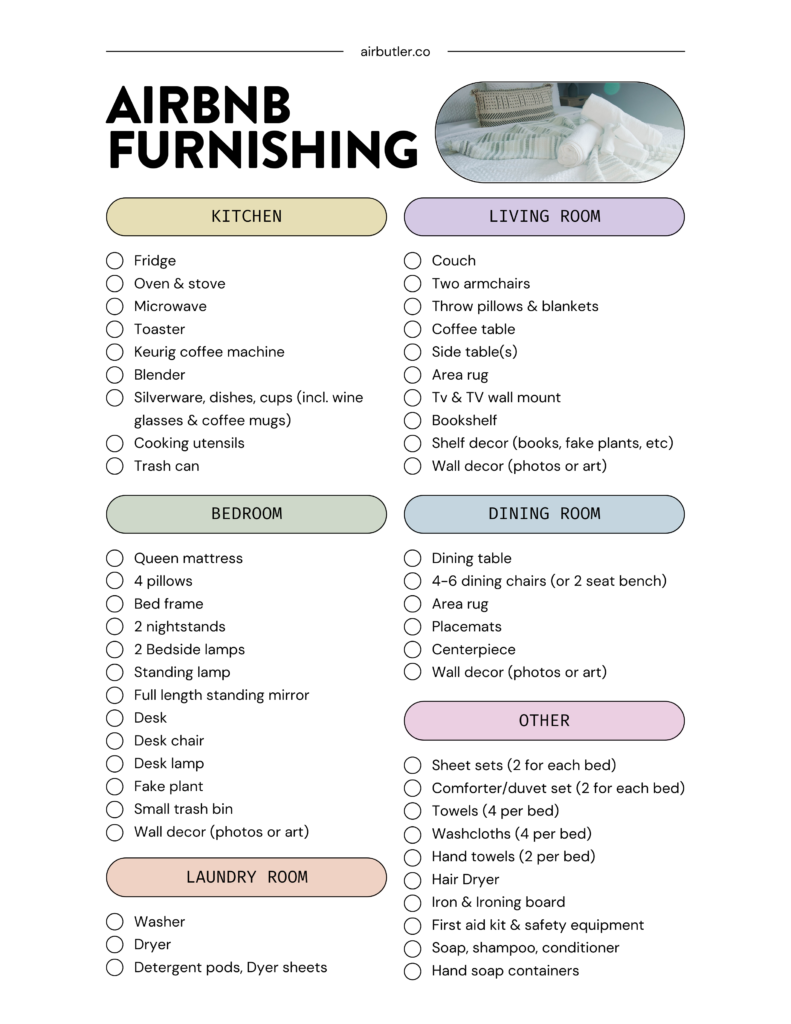
A vacation rental should feel complete the moment a guest walks through the door. If they immediately notice there’s nowhere to unpack a suitcase, charge a phone, or comfortably eat dinner, the experience starts on the wrong foot.
Bedroom: quality mattress, solid bed frame, mattress protector, two pillows per guest, extra pillows in closet, nightstands on both sides, bedside lamps, USB charging ports, blackout curtains, dresser or wardrobe, luggage rack, full-length mirror, laundry basket, hangers, spare blankets.
Living room: comfortable sofa, accent chair if space allows, coffee table, side table, Smart TV, TV stand, fast Wi-Fi router, floor lamp, area rug, throw blankets, limited decorative cushions, storage basket, local guidebook.
Kitchen: dining table, comfortable chairs, full cookware set, frying pans, saucepans, sharp chef’s knife, cutting board, mixing bowls, baking tray, plates, bowls, glasses, coffee mugs, wine glasses, coffee maker, electric kettle, toaster, trash and recycling bins.
Bathroom: large bath towels, hand towels, washcloths, hair dryer, storage shelves, shower caddy, toilet brush, extra toilet paper, laundry hamper, small trash can, towel hooks.
Workspace: desk, comfortable office chair, task lighting, fast Wi-Fi, power strip, USB charging ports.
Outdoor: dining table, comfortable chairs, patio cushions, side table, outdoor lighting, grill if appropriate, fire pit where permitted, umbrella.
Best Furniture for Airbnb Properties
One question I hear repeatedly: “Should I buy inexpensive furniture now and upgrade later?” In most cases, no. Replacing furniture every year is usually more expensive than purchasing durable pieces from the beginning. The goal isn’t buying the most expensive furniture — it’s buying furniture that survives frequent guest turnover.
Bedroom furniture deserves the biggest budget priority. Guests forgive average artwork. They rarely forgive a bad mattress. Invest in a high-quality mattress, a solid platform bed, durable nightstands, and blackout curtains — save on decorative benches, fancy headboards, and designer artwork.
Living room furniture experiences some of the highest wear and appears in your listing’s first photos. Look for performance fabric sofas, removable cushion covers, rounded coffee tables, and stain-resistant upholstery — avoid delicate fabrics that need professional cleaning after every spill.
Kitchen and dining furniture rarely draws complaints for being untrendy, but wobbly chairs get noticed immediately. Choose solid wood tables, easy-clean surfaces, and comfortable seating — and if your property sleeps six, don’t provide seating for four.
Workspace furniture matters more than it used to, now that remote work is a mainstream travel need. A comfortable desk, ergonomic chair, and reliable lighting often make a bigger difference than a dedicated office setup.
Outdoor furniture frequently influences booking decisions in vacation destinations. Powder-coated aluminum, composite tables, and weather-resistant cushions hold up far better than inexpensive wicker, which becomes brittle after prolonged sun exposure.
Furniture Comparison Guide
| Furniture | Budget Option | Mid-Range Option | Premium Option | Expected Lifespan |
|---|---|---|---|---|
| Bed Frame | Metal Platform | Solid Wood | Hardwood Designer Frame | 8–15 years |
| Mattress | Hybrid Foam | Premium Hybrid | Luxury Hotel Mattress | 7–10 years |
| Sofa | Polyester Fabric | Performance Fabric | Commercial-Grade Upholstery | 6–10 years |
| Dining Table | MDF with Veneer | Solid Wood | Hardwood Dining Set | 8–15 years |
| Dining Chairs | Metal Frame | Upholstered Wood | Commercial Dining Chairs | 6–10 years |
| Coffee Table | Laminate | Solid Wood | Stone or Hardwood | 8–12 years |
| Outdoor Furniture | Resin | Powder-Coated Aluminum | Teak or Commercial Set | 7–15 years |
How Much Does It Cost to Furnish an Airbnb?
The honest answer: it depends on your market, property size, and the experience you’re trying to create. A weekend rental near a national park doesn’t require the same budget as a luxury condo in Miami.
| Property Type | Estimated Budget |
|---|---|
| Studio Apartment | $6,000–$10,000 |
| 1-Bedroom Airbnb | $9,000–$15,000 |
| 2-Bedroom Airbnb | $14,000–$22,000 |
| Luxury Vacation Rental | $30,000–$60,000+ |
Typical individual item costs: bed frame $200–$900, mattress $500–$1,500, sofa $700–$2,000, dining table $300–$1,200, Smart TV $300–$1,200, kitchen equipment $800–$2,000, smart lock $150–$350, outdoor furniture $600–$3,000. These are planning estimates — quality pieces from the start often lower replacement costs over the life of the property, a factor worth weighing against your overall Airbnb startup budget.
Where to Save Money and Where to Spend More
Guests don’t notice every dollar you spend equally. Some upgrades get remembered in reviews. Others barely register.
Spend more on: the mattress (one of the highest-return investments — guests will never comment on your coffee table, but they’ll absolutely mention a poor night’s sleep), the sofa (where families gather and remote workers spend hours), dining chairs (constant use makes wobbly seating an instant negative), blackout curtains (real sleep-quality improvement), and a smart lock (smoother arrivals, fewer late-night calls).
Save money on: decorative pillows, trendy wall art, seasonal decorations, designer vases, and accent décor that mostly adds clutter and cleaning time. Choose timeless pieces and update accessories gradually as the property evolves.
Common Airbnb Furnishing Mistakes
Most furnishing mistakes aren’t expensive because of the initial purchase — they’re expensive because they create ongoing maintenance, replacements, or poor guest experiences.
Buying residential furniture for heavy use. A private home might host a few visitors each month. A busy short-term rental welcomes dozens of different guests every year, and furniture designed for occasional use wears out much faster under those conditions.
Prioritizing style over comfort. Instagram-worthy interiors don’t guarantee five-star reviews. Guests remember comfortable beds, good lighting, functional kitchens, and comfortable seating — style should enhance comfort, not replace it.
Ignoring storage. Even short stays require luggage, clothing, and personal items — closet space, dressers, luggage racks, and entryway hooks make a space feel larger and more welcoming.
Forgetting maintenance. Before buying anything, ask whether it can be cleaned quickly, whether replacement parts will be available, and how it will look after hundreds of guests.
Copying another Airbnb. It’s tempting to recreate a popular listing you found online. Design around your own location and audience instead — a mountain cabin should feel different from a downtown loft.
Expert Design Tips That Increase Bookings
Create one memorable feature — a reading corner with a view, a stylish coffee station, a cozy fireplace seating area, a statement headboard. Guests often remember and photograph these details specifically.
Keep the color palette consistent. Neutral foundations with a few accent colors age better than trendy designs and make replacing individual pieces much easier over time.
Layer your lighting instead of relying on one bright ceiling fixture — table lamps, floor lamps, bedside lighting, and accent lighting together create a warmer, more inviting atmosphere in both listing photos and evening stays.
Design with photography in mind. Arrange furniture so rooms appear spacious, uncluttered, and naturally lit — a well-furnished room paired with strong photography and a compelling title can dramatically improve click-through rates together.
Review guest feedback before redesigning. If multiple reviews mention uncomfortable chairs, lack of storage, poor lighting, or a missing workspace, address those issues before buying more decorative items.
Frequently Asked Questions
How do you furnish an Airbnb?
Start by identifying your target guest, then furnish each room with durable, comfortable essentials. Focus your budget on high-impact items like mattresses, sofas, dining furniture, and smart home features, while keeping décor simple and cohesive.
What furniture should every Airbnb have?
Every Airbnb should include comfortable beds, quality mattresses, bedside tables, a sofa, dining table and chairs, a Smart TV, fast Wi-Fi, a fully equipped kitchen, storage space, blackout curtains, and reliable lighting. Depending on your audience, a workspace, outdoor seating, or family-friendly amenities may also add value.
How much does it cost to furnish an Airbnb?
Most U.S. hosts spend roughly $6,000–$10,000 for a studio, $9,000–$15,000 for a one-bedroom, $14,000–$22,000 for a two-bedroom, and $30,000–$60,000+ for a luxury vacation rental, depending on furniture quality and property size. According to Wayfair Professional’s guidance for short-term rental furnishing, commercial-grade materials remain the most cost-effective choice over a multi-year horizon despite the higher sticker price.
What is the best furniture for Airbnb rentals?
The best Airbnb furniture combines comfort, durability, and easy maintenance — solid wood tables, commercial-grade seating, performance-fabric sofas, quality mattresses, washable textiles, and scratch-resistant finishes typically provide the best long-term value.
Conclusion
Learning how to furnish Airbnb properties isn’t about filling rooms with expensive furniture or following the latest interior design trends. It’s about creating a space that works — for your guests, your cleaners, and your business.
The most successful vacation rentals share the same qualities: comfortable beds, durable furniture, practical layouts, thoughtful amenities, and a design that feels welcoming without being cluttered. Those choices improve the guest experience, reduce maintenance, and support the kind of reviews that lead to better occupancy — the same outcome covered from a pricing angle in our guide to maximizing Airbnb revenue.
As you furnish your property, every purchase should answer one question: will this make the guest’s stay better? If yes, it’s probably worth it. If not, save the budget for something guests will actually use and remember.

Leave a Reply