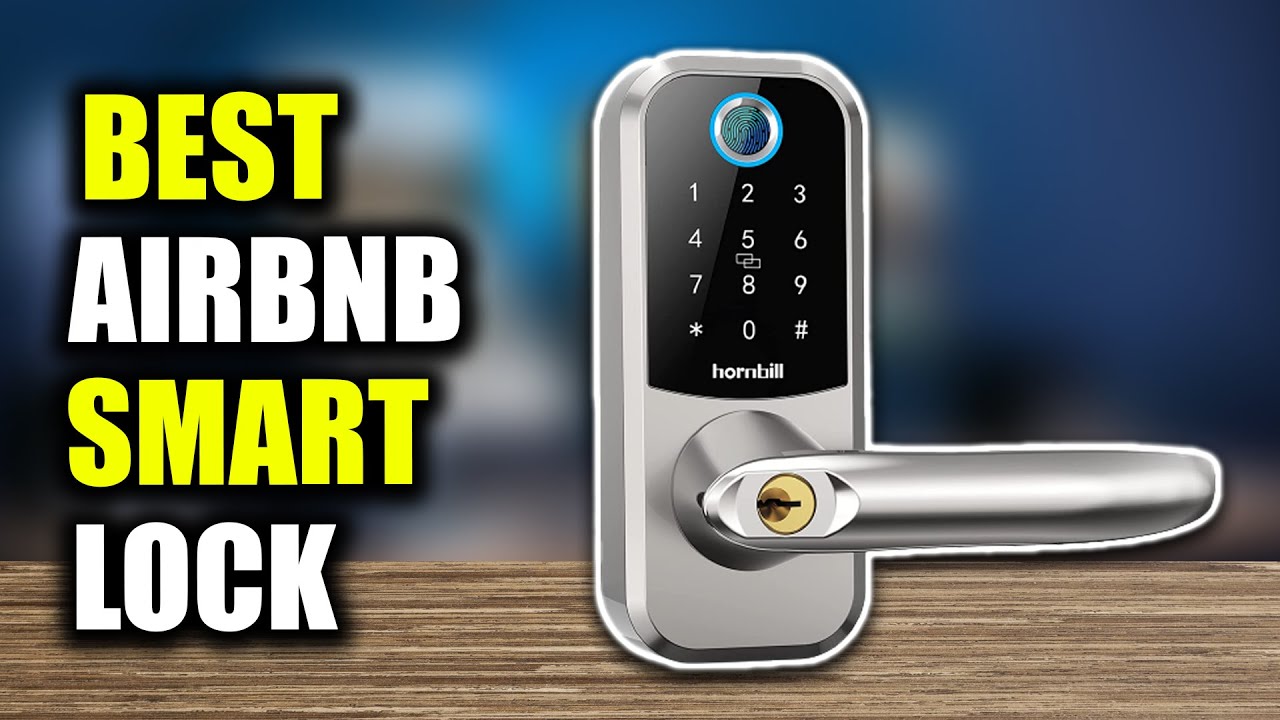
Every host who’s driven across town to hand over a key, or worse, missed a guest’s call because a lockbox code stopped working, eventually asks the same question: what’s actually the best smart lock for Airbnb, not just for a regular house. The answer is more specific than a general “best smart lock” list would suggest, because a rental property has different demands than a home — remote code management, guest turnover every few days, and reliability that doesn’t depend on you being nearby to fix a problem.
Here’s what actually matters for short-term rental use, the specific locks worth considering in 2026, and where a plain keyless entry system might serve you better than a full smart lock.
What to Actually Look For in an Airbnb Smart Lock
Wi-Fi connectivity, not just Bluetooth. A Bluetooth-only lock requires you to be within physical range to manage codes or check status, which defeats the purpose for remote hosts. Wi-Fi models let you generate and revoke codes from anywhere.
A physical key backup. Power outages and dead batteries are rare but real, and a guest locked out at midnight is exactly the emergency you want prevented, not managed reactively. Any lock without a backup key option is a risk not worth taking on a rental property.
Native platform integration or PMS compatibility. The best setups auto-generate a unique code per reservation and expire it automatically at checkout, rather than requiring you to manually create and delete codes for every booking.
Battery life suited to rental-level traffic. A lock designed for home use, opened a handful of times daily, drains differently than one handling guest turnover multiple times a week. Look specifically at battery estimates based on rental-frequency use, not general home use.
The Best Smart Lock for Airbnb Overall: Yale Assure Lock 2
For most hosts, the Yale Assure Lock 2 is the safest default choice, and it’s become the most widely adopted lock among vacation rental operators for a specific reason: native Airbnb integration that automatically generates and sends a unique guest code per booking without manual setup. It supports Wi-Fi, and its modular design lets you add Bluetooth or Thread connectivity depending on your existing smart home setup. Reported battery life under rental-level use commonly runs 12+ months, which matters when the alternative is a maintenance visit just to swap batteries.
Best Smart Lock for Vacation Rentals With Unreliable Wi-Fi: Igloohome
If your property is in a rural area or anywhere Wi-Fi reliability is a real concern, Igloohome solves a problem most other smart locks can’t: its algoPIN technology generates time-limited codes that validate locally on the lock itself, without needing an internet connection at the door. You create the code in the app, send it to your guest, and it expires automatically at checkout — all without either device needing to be online at the moment of use. This makes it a standout best smart lock for vacation rental properties specifically in areas where connectivity can’t be guaranteed.
Best Door Lock for Airbnb on a Budget: Wyze Lock Bolt
Not every property needs a premium lock, and for a secondary property or a budget-conscious setup, the Wyze Lock Bolt delivers core smart functionality — remote code management and app-based access — at a meaningfully lower price point than the premium options above. It’s a reasonable best door lock for Airbnb hosts specifically prioritizing cost over the extra integrations premium models offer.
Best for Multi-Property Hosts: RemoteLock and PMS Integration
Once you’re managing more than one or two properties, the lock itself matters less than how well it plugs into your broader operations. RemoteLock and similar platforms integrate with the major property management systems, syncing your booking calendar directly to automatic code generation and revocation across your entire portfolio, hardware-brand-agnostic in many cases. This is where a co-hosted or growing portfolio genuinely benefits from centralizing lock management rather than juggling a different app per property.
Keyless Entry for Airbnb: How It’s Different From a Full Smart Lock
Keyless entry is a broader category than “smart lock” specifically — it includes simple keypad deadbolts that don’t connect to Wi-Fi or an app at all, just a fixed or manually-changeable numeric code. These are cheaper and simpler, but they lack remote management, meaning you’re back to manually updating a shared code between guests rather than generating unique per-reservation codes automatically. For a single low-turnover property, this simplicity can be genuinely sufficient; for anything with regular turnover, the lack of automatic per-guest codes becomes a real limitation.
Quick Comparison
| Lock | Best For | Key Strength |
|---|---|---|
| Yale Assure Lock 2 | Most hosts, default choice | Native Airbnb integration, strong battery life |
| Igloohome | Unreliable Wi-Fi areas | Offline code generation via algoPIN |
| Wyze Lock Bolt | Budget-conscious setups | Core smart features at a low price |
| RemoteLock | Multi-property portfolios | Cross-brand PMS integration |
| Basic keypad deadbolt | Single, low-turnover property | Simplicity, no app or subscription needed |
Pricing and exact feature availability shift often in this category — confirm current specs directly with each manufacturer before buying.
How This Fits Your Broader Check-In Setup
A smart lock solves the physical access problem, but it works best paired with clear instructions delivered at the right time — our guest message templates include a pre-arrival message template that pairs naturally with sending a lock code. If you’re managing a property remotely, a reliable smart lock is arguably the single highest-leverage device you can install, since it removes the one task that otherwise requires physical presence or a local contact for every single check-in.
Installation: What to Expect
Most smart locks built for rentals are designed as deadbolt retrofits rather than full lock replacements, meaning they fit standard door prep without needing a locksmith in most cases. Typical installation runs around 30 minutes with basic tools for a standard door thickness, though older doors with non-standard cutouts occasionally need an adapter plate or minor drilling adjustment. If you’re not comfortable with basic tools yourself, this is a reasonable one-time cost to hire out — it’s a poor place to cut corners, since a poorly installed lock is a guest-lockout risk waiting to happen on your first fully-booked weekend.
Maintaining Your Lock as Part of Regular Turnover
A smart lock isn’t a install-and-forget device — treat battery checks as a recurring line item in your turnover checklist rather than something you only think about when a guest reports an issue. Most locks provide a low-battery alert through their app well before failure, but checking this proactively during a routine cleaning visit is far better than discovering a dead lock the moment a new guest arrives. Keep a spare set of batteries on-site, ideally noted in your welcome book or a maintenance closet, so whoever’s handling turnover doesn’t need a special trip for something this simple.
Most jurisdictions don’t restrict electronic locks specifically, but it’s worth checking your local short-term rental regulations if you’re in a market with unusually strict rules, since a small number of jurisdictions do have specific requirements around access control for rental properties. Separately, while a basic keypad or app-controlled lock isn’t a recording device and doesn’t carry the same disclosure requirements as a camera, being transparent in your house rules that entry is keyless and code-based tends to reduce guest confusion at check-in more than it raises any privacy concern.
Methodology note: recommendations above are based on aggregated 2026 product reviews, manufacturer specifications, and vacation-rental-industry compatibility data. Pricing, integrations, and feature sets change frequently in this category — verify current specs directly with each vendor before purchasing.
FAQ
How does an Airbnb smart lock actually work?
Most models connect to Wi-Fi or Bluetooth and let you generate a unique numeric code for each guest through an app, either manually or automatically synced to your booking calendar. The guest enters the code on the keypad to unlock the door, and the code typically expires automatically at checkout — no physical key exchange required.
Do I need Wi-Fi at the property for a smart lock to work?
For most models, yes, if you want to manage codes remotely — though the lock will still accept previously-set codes even during a temporary outage. Igloohome is a notable exception, generating and validating codes without requiring the lock itself to be online.
Is a smart lock worth it for a single, low-turnover property?
It can be, but the cost-benefit is less dramatic than for a high-turnover rental — a simple keypad deadbolt without app connectivity may be sufficient if you’re not managing frequent guest changeovers.
Bottom Line
The best smart lock for Airbnb depends on your specific situation more than any single “best overall” pick suggests — Yale Assure Lock 2 is the safest default for most hosts, Igloohome solves the connectivity problem for remote or rural properties, and RemoteLock-style platforms make sense once you’re managing multiple units. Whichever you choose, prioritize a physical key backup and confirm real-world battery life under rental-frequency use before committing, since those two details cause more actual headaches than any comparison chart tends to capture.
For Airbnb’s official policy on security and access devices, see Airbnb’s Security Devices policy page.

Leave a Reply