It’s 11pm, a guest just arrived after a long drive, and the first message lands: “Hey, sorry to bother you — how does the coffee maker work?” Multiply that by every appliance, every Wi-Fi password, every “where’s the nearest grocery store” question across a full year of bookings, and it adds up to a genuinely significant chunk of a host’s time. An Airbnb welcome book exists specifically to intercept that entire category of question before it ever reaches a host’s phone.
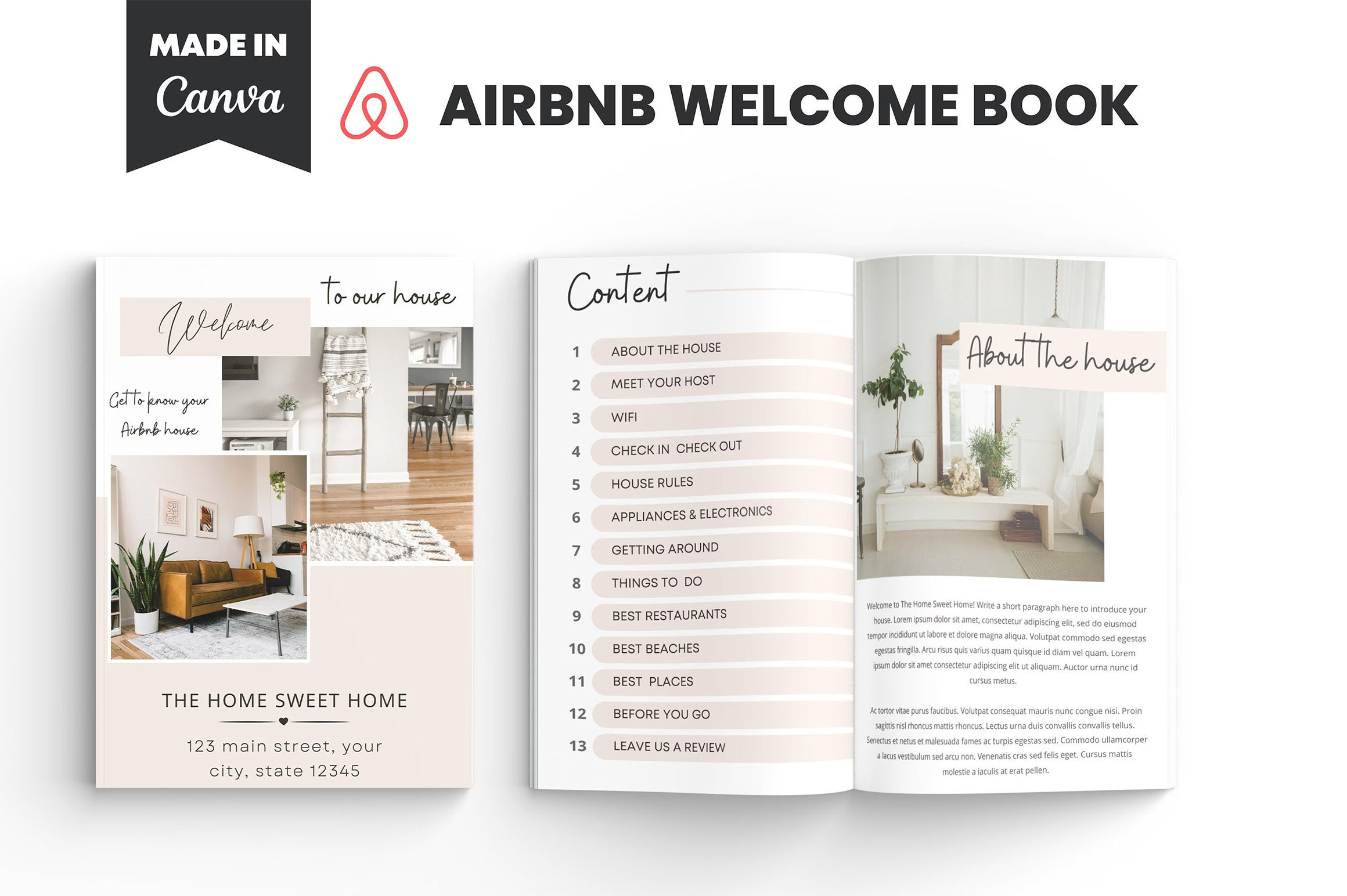
Some hosts call it a welcome book. Others call it a guidebook, or a house manual. The terms overlap almost completely — a curated document or digital page covering everything a guest needs to know, handed over before or during their stay instead of answered one message at a time.
What Actually Goes Into a Good Guest Guidebook
A strong guidebook covers three distinct categories, and hosts who skip one tend to see the same repetitive questions keep showing up anyway.
Property operation comes first — Wi-Fi network name and password, how the thermostat works, appliance instructions for anything non-obvious (a finicky coffee maker, a smart lock with a specific code sequence), trash and recycling procedures, and parking instructions. This is the section that eliminates the most late-night messages.
Local recommendations matter more than hosts often expect, and they’re also where a guidebook does real marketing work — a well-curated list of nearby restaurants, coffee shops, and activities makes a stay feel genuinely hosted rather than transactional, and it’s exactly the kind of detail guests mention favorably in reviews.
House-specific policies and safety information rounds it out — emergency contacts, fire extinguisher location, any quirks worth flagging (a door that sticks, stairs that creak, a pool that requires a code to access). This section overlaps with, but shouldn’t replace, formal house rules, since a guidebook explains how to do things while house rules establish what’s expected.
Airbnb Guidebook Template: A Practical Starting Structure
Rather than building from a blank page, most hosts do better starting from a consistent section order and filling in property-specific content underneath each one.
Welcome message — a brief, warm opening that sets tone before diving into logistics.
Check-in instructions — door codes, key location, or self-check-in steps, ideally with a photo if the entrance is at all unusual to find.
Wi-Fi and entertainment — network name, password, streaming service logins if provided, remote instructions.
Kitchen and appliances — anything non-intuitive, from the coffee maker to the dishwasher to how the stove ignites.
House rules recap — a short pointer back to the formal rules rather than repeating them in full, avoiding a document that reads twice as long as it needs to.
Local recommendations — a genuinely curated shortlist rather than an overwhelming directory; five excellent restaurant picks beat twenty generic ones nobody has time to sort through.
Emergency information — nearest hospital or urgent care, host contact info, and anything safety-relevant to the specific property.
Checkout instructions — what’s expected before departure (trash out, dishes done, thermostat setting), and checkout time.
This structure works as the backbone for a welcome book, a guidebook, or a house manual interchangeably — the terminology differs by host preference more than the actual content differs in practice.
How to Make an Airbnb Guidebook
Airbnb’s platform includes a built-in Guidebooks feature directly within the host dashboard, letting hosts build recommendation-focused guides that guests can access through the app itself, separate from a printed document left in the property. This works well specifically for the local-recommendations portion, though it’s less suited to detailed appliance instructions or property-specific operational notes.
For the operational and property-specific content, many hosts build a separate digital document — a simple PDF, a dedicated webpage, or a note accessible via QR code posted somewhere visible in the property — and combine it with Airbnb’s native Guidebooks feature for the local recommendation side specifically. Airbnb’s own guidance on building a Guidebook walks through the current in-app process directly, since the feature has evolved with several app updates.
A physical printed copy left in the property, even alongside a digital version, still has real value — not every guest wants to pull out their phone at 11pm to look up the Wi-Fi password, and a laminated one-pager on the counter often gets used more than either digital option.
Digital Guidebook for Airbnb: Worth Building One Beyond Airbnb’s Native Tool?
For hosts managing more than a couple of properties, a lot of property management software includes its own digital guidebook feature, often more flexible than Airbnb’s native tool and capable of covering both local recommendations and property-specific operational details in one place, accessible through a link sent automatically at check-in. Independent research from hospitality sources like Skift has noted this kind of pre-arrival guest content increasingly functions as a retention tool too, not just a convenience — guests who feel genuinely prepared tend to leave stronger reviews and return more often.
The trade-off is straightforward: Airbnb’s built-in Guidebooks feature is free and simple but somewhat limited in scope. A dedicated tool or a hand-built document offers more flexibility and can be shared across every booking channel a host uses, not just Airbnb specifically — a real advantage for hosts also listing on VRBO or accepting direct bookings.
Where Guest Guides Genuinely Reduce Host Workload
A well-built guide doesn’t just answer questions politely — it prevents them from being asked in the first place, which is a measurable difference in a host’s actual daily workload. Hosts who track their message volume before and after implementing a thorough guidebook frequently notice a real drop in repetitive questions, freeing up time for the messages that genuinely need a personal response rather than a pointer to information that was already available.
This connects directly to response rate, one of the four Superhost thresholds — fewer incoming questions overall makes hitting a 90% response rate within 24 hours considerably easier to sustain consistently, simply because there’s less volume competing for attention during a busy week.
Mistakes That Undercut an Otherwise Good Guidebook
Cramming too much into the local recommendations section defeats the purpose entirely — a guide listing forty restaurants provides less actual value than five genuinely curated picks, since overwhelmed guests default back to a generic search engine anyway.
Writing appliance instructions that assume familiarity guests don’t have is a common gap — “use the usual settings” means nothing to someone who’s never seen this specific coffee maker before; a guide needs to explain steps as if for someone encountering the appliance for the first time.
Letting the guidebook go stale after a renovation or appliance swap creates real confusion, and it’s an easy detail to forget updating amid everything else involved in property changes.
Building a guide so long that guests never actually read it past the first section undermines the entire point — a genuinely useful guidebook respects a guest’s limited attention and gets the most important information (Wi-Fi, check-in, emergency contacts) somewhere impossible to miss.
Frequently Asked Questions
What’s the difference between an Airbnb welcome book, guidebook, and house manual?
Functionally, very little — these terms describe the same core concept: a document or digital resource covering property instructions, local recommendations, and house-specific information for guests. The choice of term tends to reflect host preference rather than a meaningful difference in content.
How do I add a guidebook to my Airbnb listing?
Airbnb includes a built-in Guidebooks feature accessible through the host dashboard, primarily geared toward local recommendations. For property-specific operational instructions, many hosts supplement this with a separate PDF or webpage, often accessed via a QR code posted in the property.
Should I provide a printed guidebook or just a digital one?
Both have real value — a physical copy left in the property gets used by guests who don’t want to pull out their phone for basic instructions, while a digital version is easier to update and can include more detail without printing costs.
How long should an Airbnb guidebook be?
Long enough to cover check-in, essential appliances, house rules highlights, a curated (not exhaustive) local recommendation list, and emergency information — but organized so the most important details are impossible to miss rather than buried in a lengthy document guests skim past.
Most hosts who build a genuinely useful guide notice the same result within a few bookings: fewer repetitive messages, guests who arrive feeling more prepared, and a bit more room in the evening that used to go toward answering the same coffee-maker question for the fifth time that month.


Leave a Reply