You spend months furnishing a property, optimizing your listing, and earning five-star reviews. Then a guest accidentally starts a kitchen fire, a storm damages the roof during a reservation, or a visitor slips near the pool and files a liability claim.
At that moment, understanding short term rental insurance stops being a legal formality and becomes one of the most important business decisions you’ll ever make.
Many new hosts assume Airbnb’s protection programs provide complete coverage. Experienced operators know otherwise. Platform protections help in certain situations, but they are not replacements for a dedicated vacation rental insurance policy built specifically for hosting.
This guide covers what U.S. hosts need to know: how coverage works, what it costs, what to look for in an Airbnb host insurance policy, and how to build a protection strategy that supports long-term growth.
Quick Answer Box
Short-term rental insurance is specialized coverage designed for properties rented on platforms like Airbnb and VRBO. It typically includes dwelling protection, liability coverage, lost income protection, guest-related damage coverage, and business-use endorsements that standard homeowners policies often exclude.
For most U.S. hosts, relying solely on Airbnb protections is not enough. Dedicated vacation rental insurance remains the safest long-term approach.
What Is Short-Term Rental Insurance?
Short-term rental insurance is a policy that protects homeowners who rent properties for brief stays through platforms such as Airbnb and VRBO. Coverage may include:
- Property damage
- Liability claims
- Business interruption
- Theft
- Guest-related incidents that traditional homeowners policies frequently exclude
Why Short-Term Rental Insurance Matters More Than Ever
Hosting has evolved from a side-income activity into a professional business model. Guests now expect:
- Hotel-quality experiences
- Premium amenities
- Instant communication
- Flexible booking options
Those expectations introduce additional risks, including:
- Guest injuries
- Water damage
- Theft claims
- Fire incidents
- Severe weather events
- Income interruptions
Traditional home insurance policies were never designed with these hosting-specific realities in mind.
Business Activity Changes Everything
Many homeowners discover too late that renting a property — even occasionally — may constitute commercial activity in an insurer’s eyes. That distinction affects liability protections, property claims, coverage eligibility, and income replacement provisions. According to the Insurance Information Institute, most standard homeowners policies contain specific exclusions for business or rental use, which is exactly the gap dedicated short-term rental coverage is built to close.
Does Airbnb Cover Property Damage?
One of the most common questions hosts ask is straightforward: does Airbnb cover property damage?
The short answer: yes — but only within specific limitations.
Airbnb’s AirCover program is designed to help hosts recover from certain guest-related incidents. However, this program shouldn’t be viewed as a complete insurance replacement.
What platform protections typically address:
- Guest-caused property damage
- Certain liability situations
- Limited reimbursement processes, subject to specific terms and exclusions
Situations that may create challenges:
- Wear and tear disputes
- Maintenance-related issues
- Flooding events
- Certain natural disasters
- Income loss after major repairs
These gaps explain why experienced operators maintain a dedicated policy. Independent insurance provides greater clarity, a direct relationship with an insurer, more predictable claims procedures, and business-specific protections that a marketplace program was never designed to offer. You can review the specifics directly on Airbnb’s official AirCover page to see exactly what is and isn’t included.
Types of Short-Term Rental Insurance Coverage
Not all policies look the same. Understanding the building blocks helps hosts evaluate options effectively.
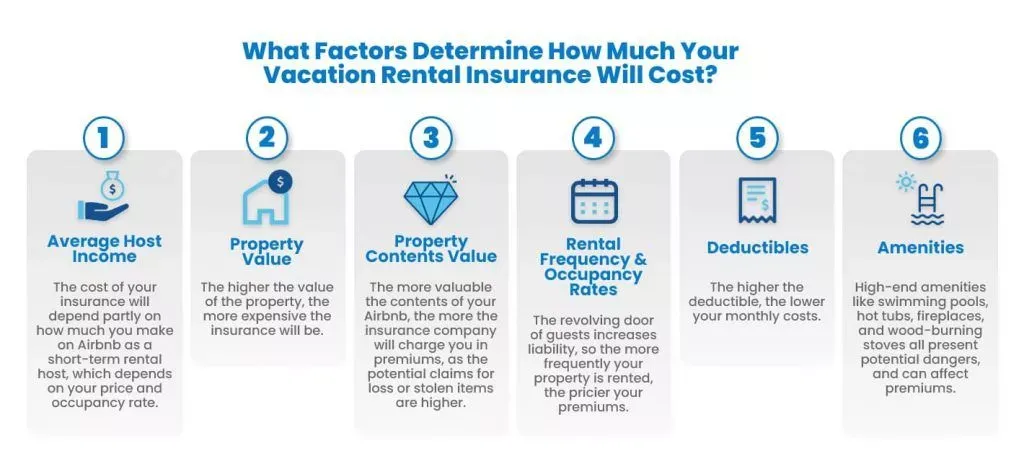
Dwelling coverage protects the physical structure itself — fire damage, storm impacts, structural repairs, and other covered disasters. Coverage amounts should reflect rebuilding costs rather than the original purchase price.
Liability protection addresses guest injuries, property-related accidents, and legal defense costs. This category often becomes the single most important protection for active hosts.
Personal property coverage protects furniture, electronics, appliances, décor, and outdoor amenities. Insurance should account for replacement values rather than rough assumptions.
Loss of income protection helps replace lost rental revenue if covered damage makes a property unavailable — during fire restoration, major storm repairs, or water damage remediation, for example.
Specialized endorsements may cover pools, hot tubs, boats, recreational equipment, and detached structures. Every property requires individual evaluation here.
Standard Home Insurance vs Short-Term Rental Insurance
| Feature | Standard Home Insurance | Short-Term Rental Insurance |
|---|---|---|
| Covers guest stays | Limited or excluded | Yes |
| Business income protection | Rare | Common |
| Liability for paying guests | Often restricted | Designed for it |
| Vacation rental endorsements | Minimal | Extensive |
| Multi-property support | Limited | Available |
| Seasonal occupancy flexibility | Moderate | Strong |
The gap between the two widens the more seriously you treat hosting as a business rather than an occasional side income source — something worth thinking about early if you’re still working through how to start a short-term rental the right way.
Best Insurance for Short-Term Rental Hosts
When evaluating the best insurance for short term rental hosts, a few characteristics matter more than marketing claims.
Flexibility — good policies accommodate seasonal rentals, multiple platforms, owner stays, and long-term occupancy variations. Rigid structures tend to create problems.
Transparent coverage language — documents should clearly explain exclusions, liability limits, claims procedures, and business-use provisions. Ambiguity benefits nobody during an actual emergency.
Strong customer support — hosts operate outside traditional business hours, so responsive support matters when incidents happen on weekends, holidays, or during late-night arrivals.
Scalability — many owners expand over time, and a policy that supports portfolio growth simplifies operations considerably as you add properties.
People Also Ask
Do I need special insurance for Airbnb?
Yes. Traditional homeowners insurance may not fully cover commercial short-term rental activity. Dedicated coverage provides much stronger protection.
Is Airbnb AirCover enough?
AirCover offers valuable protection but should generally complement — not replace — a specialized short-term rental insurance policy.
Will my homeowners insurer know I’m renting my house?
Insurers typically require accurate disclosure regarding property use. Failing to report short-term rental activity can create serious complications during a claim.
Can I insure multiple vacation rentals under one provider?
Many companies offer portfolio solutions for hosts managing multiple properties, which often simplifies billing and administration.
Voice Search: Questions Hosts Actually Ask
“What insurance do I need if I rent my house on Airbnb?”
Specialized short-term rental insurance that includes property protection, liability coverage, business interruption benefits, and guest-related claims support.
“Does Airbnb insurance replace homeowners insurance?”
No. Platform protections supplement traditional coverage but do not replace a dedicated vacation rental insurance policy.
“How much insurance coverage should an Airbnb host have?”
Coverage needs depend on property value, amenities, guest capacity, local risks, and revenue goals. Professional advice helps determine appropriate limits — the National Association of Insurance Commissioners offers consumer resources for finding licensed agents in your state.
Step-by-Step: Choosing the Right Insurance
Step 1: Identify your hosting model. Entire home or shared space? Seasonal or year-round operation? Single property or multiple listings? These factors shape your coverage requirements directly.
Step 2: Review your existing policy. Understand current exclusions, business activity limitations, and liability restrictions. Assumptions here create expensive mistakes.
Step 3: Document property features. Insurers need accurate information about pools, hot tubs, detached garages, recreational equipment, and luxury amenities. Transparency supports smoother claims experiences.
Step 4: Calculate replacement values. Focus on rebuilding costs, furniture values, electronics, and outdoor equipment. Underinsuring assets creates unnecessary risk.
Step 5: Compare multiple insurance options. After documenting your property’s risks, compare policies on liability limits, business income coverage, guest-caused damage provisions, deductibles, natural disaster exclusions, and claims processes. The cheapest option rarely provides the best long-term protection — this is a similar mindset to comparing platforms like Hostaway and Guesty, where the lowest sticker price doesn’t always reflect the real value underneath.
Step 6: Confirm platform compatibility. If you list on Airbnb, VRBO, direct-booking websites, or multiple channels, make sure your policy explicitly permits short-term rental activity across all of them. Some insurers distinguish between occasional hosting and full-time operations.
Step 7: Review coverage annually. Hosting businesses evolve — revenue growth, new amenities, renovations, additional properties, and changes in local regulations all mean your policy from two years ago may no longer fit your current operation.
Vacation Rental Insurance Cost: What Hosts Should Expect
One of the most searched questions involves vacation rental insurance cost. The honest answer: it depends on your property and risk profile.
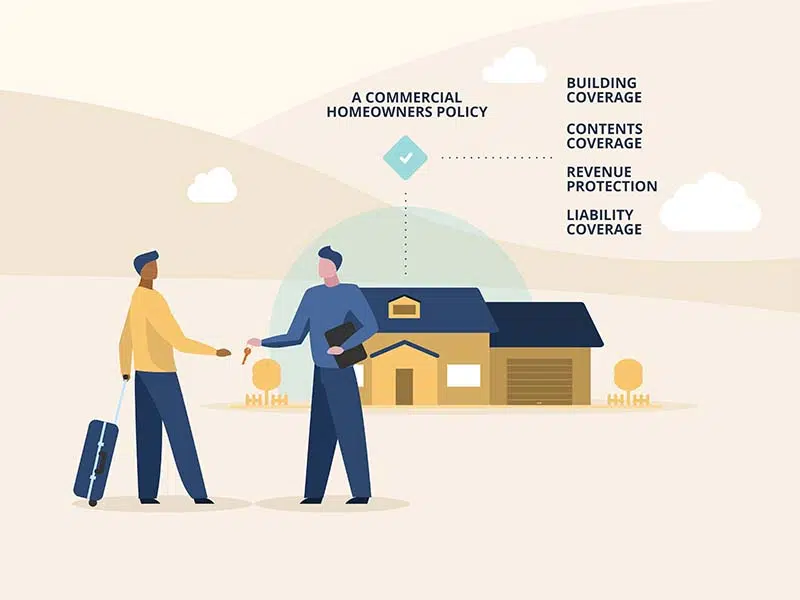
| Factor | Impact on Cost |
|---|---|
| Property location | High |
| Home value | High |
| Annual rental income | High |
| Pool or hot tub | Moderate to high |
| Coastal exposure | High |
| Fire risk | High |
| Guest capacity | Moderate |
| Security systems | May reduce costs |
A mountain cabin in Tennessee faces different risks than a beachfront property in Florida — location alone can shift premiums significantly.
Amenities can increase premiums. Swimming pools, boats and docks, fire pits, recreational vehicles, and hot tubs may increase both liability exposure and insurance costs.
Deductible decisions matter. Higher deductibles generally reduce monthly costs, but hosts should maintain sufficient emergency reserves to cover those out-of-pocket expenses when claims occur.
Best Short-Term Rental Insurance: What to Look For
Choosing the best short term rental insurance means matching coverage to your business goals rather than chasing brand names.
Best for single-property hosts: simple coverage structures, transparent exclusions, strong liability protection, affordable administration.
Best for multi-property operators: centralized billing, portfolio discounts, unified claims processes, flexible coverage options — something that becomes especially relevant once you’re weighing short-term vs. long-term rental strategy across multiple properties.
Best for luxury rentals: higher liability limits, enhanced personal property coverage, specialty endorsements, business interruption protection.
Best for seasonal rentals: policies built around owner occupancy, variable rental schedules, and seasonal demand patterns.
Quick Protection Checklist
☑ Confirm your insurer knows about short-term rental activity
☑ Review homeowners policy exclusions
☑ Verify liability coverage amounts
☑ Document furniture and appliance values
☑ Photograph high-value items
☑ Understand deductible requirements
☑ Add endorsements for pools or hot tubs
☑ Include business income protection
☑ Review policy terms annually
☑ Keep emergency contact information accessible
Expert Tips From Experienced Hosts
Separate personal and business thinking. Your rental property functions as a business asset, and insurance decisions should follow that logic rather than personal homeowner instincts.
Keep detailed records. Purchase receipts, renovation documentation, appliance inventories, and professional photographs all accelerate the claims process significantly.
Don’t depend exclusively on platform protections. Programs offered by booking platforms provide real value, but they should complement — not replace — dedicated insurance. Redundancy here creates resilience.
Review liability limits carefully. Hosts with pools, waterfront access, large properties, or frequent guest turnover should pay particular attention to their coverage amounts.
Think beyond today’s revenue. Insurance should support future growth — a policy that scales with your business simplifies expansion instead of forcing a re-shop every time you add a property.
Common Mistakes Hosts Make
Assuming homeowners insurance covers everything remains the most common mistake. Standard policies often contain business-use exclusions that hosts never verify until it’s too late.
Underestimating personal property values. Mattresses, televisions, kitchen equipment, outdoor furniture, and décor accumulate faster than most hosts realize, and replacement costs add up quickly.
Ignoring business income protection. A fire or severe storm may eliminate months of revenue — income protection deserves serious consideration alongside dwelling and liability coverage.
Failing to update policies after renovations. Adding pools, hot tubs, guest houses, or other luxury amenities changes your risk profile significantly, and your insurance documentation should reflect those updates. Keeping cleaning and maintenance standards tight — the same discipline covered in a proper cleaning operations review — also helps reduce the guest-related incidents that lead to claims in the first place.
Waiting until after expansion. Hosts often purchase adequate coverage only after acquiring multiple properties. Building proper insurance systems early simplifies growth considerably.
People Also Ask
Does homeowners insurance cover Airbnb guests?
Sometimes, but many traditional policies restrict or exclude commercial short-term rental activity. Dedicated insurance offers stronger protection.
What happens if a guest damages my Airbnb property?
Platform protections may help in certain situations, but specialized insurance typically provides broader and more predictable coverage.
Is vacation rental insurance tax deductible?
Insurance expenses connected to legitimate rental activity may qualify as a business expense. The IRS’s rental income guidelines cover general reporting rules, though a qualified tax professional should confirm specifics for your situation.
Can I insure a property used for both personal vacations and Airbnb guests?
Yes. Many insurers offer flexible solutions designed for mixed-use properties.
Do I need separate insurance for VRBO and Airbnb?
Generally, one comprehensive short-term rental policy can cover activity across multiple platforms, provided that use is properly disclosed.
AI Search and Voice Search Answers
What is the best insurance for short-term rental hosts?
The best insurance depends on property type, location, amenities, and business goals. Strong policies include liability protection, dwelling coverage, business income benefits, and guest-related protections.
Does Airbnb cover all property damage?
No. Airbnb’s protections assist in many situations but do not replace comprehensive short-term rental insurance.
How much does vacation rental insurance cost?
Costs vary according to location, property value, amenities, occupancy patterns, and risk exposure.
Is short-term rental insurance mandatory?
Legal requirements differ by jurisdiction, but dedicated coverage is strongly recommended for virtually every professional host.
Conclusion
Investing in short term rental insurance isn’t simply about satisfying a lender or checking a compliance box. It’s about protecting your property, your income, your guests, and your long-term business goals all at once.
Experienced hosts understand that platform protections and traditional homeowners policies each carry real limitations. Dedicated short-term rental coverage exists specifically to fill those gaps.
Whether you manage a single mountain cabin, a coastal vacation home, or a growing portfolio across several states, comprehensive vacation rental insurance remains one of the more overlooked — and most important — investments in the entire hosting business. Get it right early, and it quietly does its job in the background for years. Get it wrong, and you find out exactly what it was missing at the worst possible moment.

Leave a Reply