Every “top Airbnb host tips” list I’ve read over the years repeats the same five obvious points — good photos, respond fast, be a good host. True, but not useful if you’re actually trying to run this like a business. What follows is organized by the areas that genuinely separate a listing that limps along from one that performs, with a short explanation of why each tip matters and a link to the full breakdown if you want to go deeper on any specific one.
If you only take one thing from this list: the hosts who consistently outperform aren’t doing anything exotic — they’re treating pricing, guest screening, turnover consistency, and response time as an interconnected system rather than four separate chores, and they’re revisiting all four regularly instead of setting them up once and forgetting them.
Pricing and Revenue
1. Stop setting one flat rate for the entire year. Demand shifts by season, day of week, and local events — a fixed price either leaves money on the table during peak demand or sits empty during slow periods. Our full pricing guide walks through how to actually set this up.
2. Use dynamic pricing, but don’t trust it blindly. Automated tools catch demand spikes you’d miss manually, but they need realistic floor and ceiling boundaries to work well — see our breakdown of dynamic pricing for Airbnb for the specifics.
3. Know your actual profit margin, not just your revenue. Gross bookings and what you actually keep after fees, cleaning, and financing are very different numbers — our profit margin guide walks through the real formula.
4. Don’t let your cleaning fee quietly hurt you. Airbnb’s service fee applies to your total booking including the cleaning fee, which is a detail most hosts never account for — covered in our cleaning fee breakdown.
Guest Communication
5. Build a small set of message templates for the predictable stuff. Booking confirmation, check-in details, checkout instructions — templating these frees you up to give real attention to anything that actually needs it. Our guest message templates cover the core ones.
6. Automate the repetitive parts, not the judgment calls. Automating Airbnb messages for logistics is smart; automating your response to a genuine complaint is how you turn a fixable situation into a bad review.
7. Send a mid-stay check-in for anything longer than a couple nights. This single message catches small issues before they become review material — it costs you thirty seconds and often prevents a much bigger problem.
8. Respond within hours, not days. Your response rate directly affects Superhost eligibility, and slow responses are one of the most common reasons hosts lose the badge without realizing why.
Cleaning and Turnover
9. Treat turnover as four separate steps, not just “cleaning.” Inspection, cleaning, restocking, and staging are each their own checklist item — our turnover checklist breaks down why restocking specifically gets missed most often.
10. Build a real time buffer between bookings. A same-day turnover on a large property with no buffer is how staging and restocking corners get cut under pressure.
11. Use a documented checklist, not memory. This matters even more once you’re not doing turnovers yourself — a co-host or cleaner working from a written list produces consistent results; one working from verbal instructions doesn’t.
Trust, Safety, and Compliance
12. Screen guests before accepting, not after something goes wrong. A rushed booking from someone who clearly hasn’t read your listing is a disproportionate source of the reviews and cancellations that hurt your metrics — see our guest screening guide.
13. Understand your cancellation exposure before it costs you a quarter’s worth of ratings. Your cancellation rate is calculated across your entire account, not per listing — one bad month can drag averages down for a full year.
14. Get real short-term rental insurance, not standard homeowner’s coverage. This is one of the few line items not worth cutting to save money — see our insurance guide for what’s actually different about STR-specific policies.
15. Know your local regulations before you get surprised by them. Short-term rental regulations vary enormously by city, and enforcement has gotten more aggressive in several major markets — worth checking even if you’ve been hosting a while without issue.
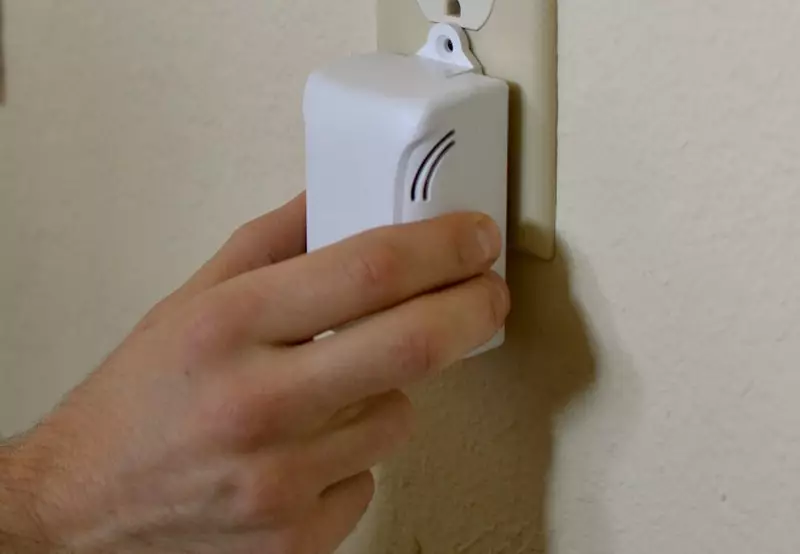
16. Consider a noise monitor if you’re hosting remotely or in a regulation-heavy market. A decibel-only sensor (never audio recording) catches an escalating situation before it becomes a neighbor complaint — our noise monitoring device comparison covers the main options.
Listing Optimization
17. Your title is doing more work than you think. A generic title blends into search results — our title examples guide shows the difference between forgettable and click-worthy.
18. Write your description for the guest, not for keyword-stuffing. A well-structured, honest description reduces mismatched-expectation reviews as much as it improves conversion — see how to write an Airbnb listing description.
19. Set realistic amenity expectations and back them up. Listing amenities you don’t consistently provide is one of the fastest ways to generate a specific, credibility-damaging complaint in a review.
20. Match photos to reality, not aspiration. A beautifully staged photo of a space that doesn’t quite match what guests actually walk into on arrival generates a specific kind of disappointment that’s worse than a plainer but accurate photo would have — guests forgive modest, they don’t forgive misleading.
Tools and Systems
21. Don’t manage multiple listings on separate calendars. A channel manager exists specifically to prevent the double-bookings that manual calendar syncing eventually produces.
22. Match your software stack to your actual scale. A single listing rarely needs the same tooling as a five-property portfolio — our best short-term rental software comparison breaks this down by scenario rather than a one-size-fits-all recommendation.
Business Fundamentals
23. Know your real startup and ongoing costs before assuming a number is profitable. New hosts consistently underestimate the gap between gross bookings and what actually lands in their pocket — our startup cost breakdown and is Airbnb profitable guide cover this from both the initial and ongoing angle.
24. Pick your market as carefully as your property. The same listing quality can produce dramatically different results depending on local demand, competition density, and regulatory stability — our best cities for Airbnb investment breakdown covers what actually matters when comparing markets.
25. Decide early whether you’re scaling or staying small, and build accordingly. A single-property host and a multi-property operator need different tooling, different time budgets, and different tolerance for automation — trying to run a growing portfolio with single-listing habits is a common source of burnout.
Why Doing All of This Consistently Matters More Than Doing Any One Thing Perfectly
It’s tempting to read a list like this and pick the two or three tips that feel most urgent right now. That’s a reasonable starting point, but it’s worth understanding why the compounding effect matters here specifically. Airbnb’s own ranking signals and guest decision-making both respond to consistency over time — a listing with a strong rating built over dozens of stays, a reliably fast response history, and a track record of accurate listings tends to outperform one that occasionally excels but is inconsistent. None of the 25 tips above works as a one-time fix; they work because they compound when maintained as habits rather than treated as a launch checklist you complete once and move past.
The Mistakes Version of This List
If you’d rather think in terms of what to avoid: the recurring mistakes I see most are underpricing out of fear of vacancy, skipping proper insurance to save a few hundred dollars, treating guest screening as optional, and assuming a five-star run of reviews means you can stop paying attention to response time and turnover consistency. Every one of those is fixable with the specific guides linked above — the mistakes rarely come from not knowing what to do, they come from not building the habit consistently once the initial setup phase is over.
A less obvious mistake worth naming separately: treating every guide, tool recommendation, or “best practice” as universally applicable regardless of your specific property, market, and management style. A tip that’s essential for a remote host managing five units in a competitive urban market may be genuinely unnecessary for someone hosting a single property they live next door to. Read recommendations like this list as a menu to select from based on your actual situation, not a mandatory checklist where every item applies equally to everyone.
How to Actually Use This List
Rather than trying to implement all 25 points simultaneously, most hosts get better results prioritizing in roughly this order: pricing and guest screening first (highest direct impact on both revenue and rating), then communication systems and turnover consistency (highest impact on review quality and repeat bookings), then compliance and insurance (protecting what you’ve already built), and finally scaling considerations once the fundamentals are genuinely solid rather than just set up. Trying to optimize everything on day one usually means nothing gets done well.
Bottom Line
None of the 22 tips above are individually revolutionary — what actually separates a strong-performing Airbnb from a mediocre one is doing all of them consistently rather than excelling at one and ignoring the rest. If you’re just getting started, don’t try to implement everything at once — pick pricing and guest screening first, since those two have the most direct impact on both revenue and rating, then layer in the rest as your hosting volume grows.
For Airbnb’s own official hosting resource hub, see Airbnb’s Resource Center for Hosts.

Leave a Reply